

Elon Musk’s space exploration and commercial spaceflight company, SpaceX, fired a set of ten Raptor 3 engines on Starship’s Flight 12 Booster 19 on Monday.
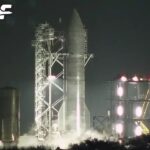
Live observers reported a shorter-than-expected duration of the Booster 19 static fire test. In an official update on X, SpaceX confirmed that the 10-engine static fire test was cut off early because of a ground-side (GSE) issue.
However, SpaceX still seems satisfied with Raptor 3 firing during this first static fire test. SpaceX is now preparing for a full-scale 33-engine static fire test ahead of the Flight 12 launch expected mid to late April.
SpaceX released the following statement confirming the completion of initial ground testing on Flight 12 vehicles (Booster 19 and Starship 39):
Initial Super Heavy V3 and Starbase Pad 2 activation campaign complete, wrapping up several days of testing that loaded cryogenic fuel and oxidizer on a V3 vehicle for the first time. While the 10-engine static fire ended early due to a ground-side issue, we saw successful startup on all installed Raptor 3 engines. Next up: preparing the booster for a 33-engine static fire.
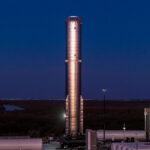
After performing the 10-engine static fire test on Super Heavy V3 Booster 19, SpaceX has transported the Starship rocket back to the Starbase production site. SpaceX is currently preparing Booster 19 for the installation of 33 Raptor 3 engines.
Raptor 3 rocket engine produces a thrust of 280 ton-force (tf). 33 engines combined will produce a massive 9,240 tf of thrust if all engines ignite during testing. SpaceX has designed and engineered the new generation of orbital launch pads to handle the immense thrust and heat of Raptor 3 engines.
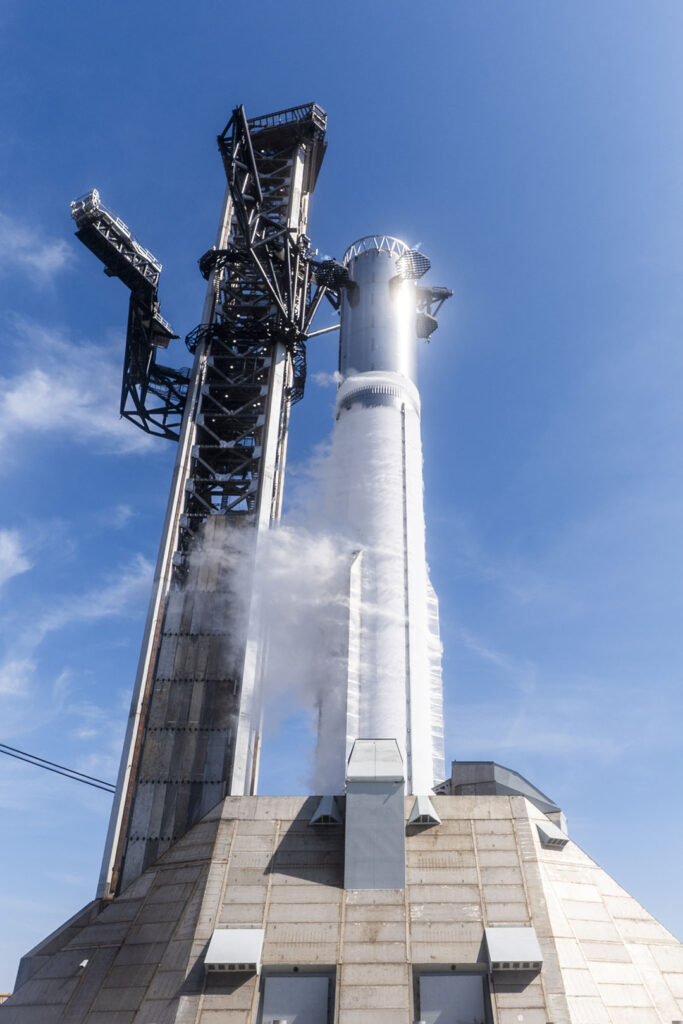
The Pad 2 orbital launch mount (OLM) at the Starbase launch site was also tested for the first time, experiencing and mitigating the force and heat of ten Raptor 3 engines firing downwards. Pad 2 is the first of its generation made for Starship V3 launches.
Pad 2 OLM’s flame trench and water deluge systems are rebuilt from the ground up. These systems look entirely different from the previous generation. SpaceX built these systems after the 1st Starship flight test, as the thrust of Raptor 2 engines dug a massive hole beneath the launch mount.
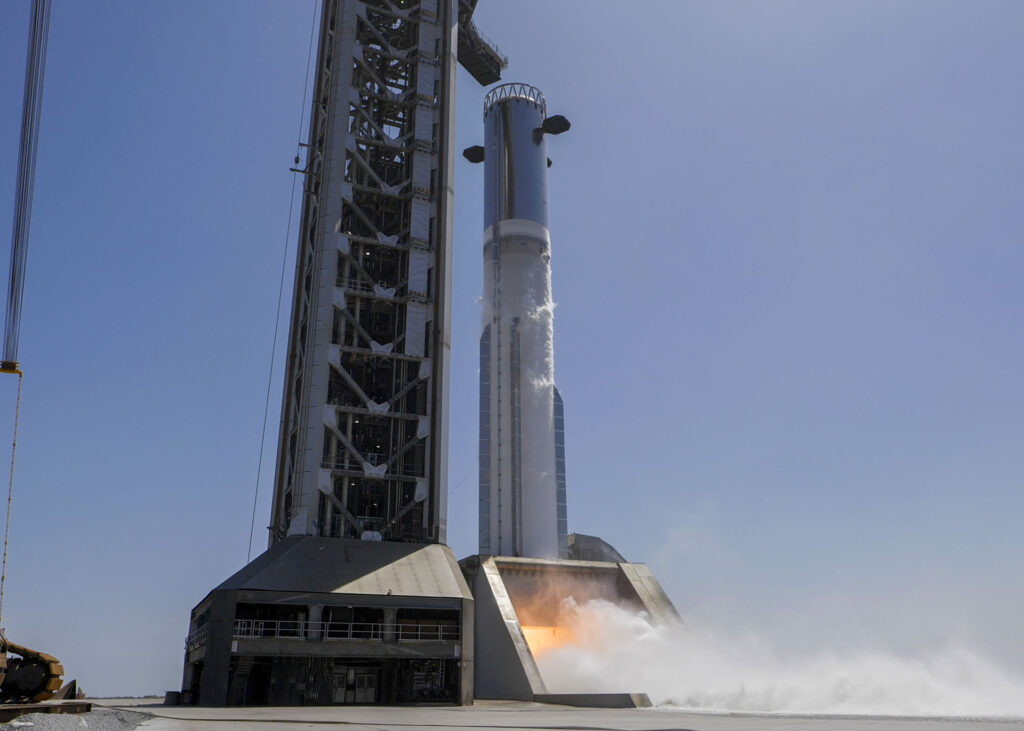
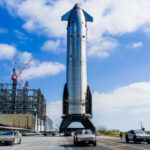
The upper stage Starship 39 (the first Starship V3) has already completed its cryogenic pressure-proof tests. In its previous set of tests, Booster 19 showed a substantial improvement in propellant load times.
The improvements and upgrades in Starship V3 vehicles are geared towards rapid reusability. Currently, SpaceX’s Falcon 9 rockets have demonstrated rapid reusability.
However, Starship is a much larger space vehicle and is meant for colonizing the Moon and Mars; therefore, achieving rapid reusability with a minimum margin for issues is very critical for these grand missions.
SpaceX is pushing ahead fast for the Flight 12 launch and landing test expected next month (April 2026). Stay tuned as we bring updates and live coverage of the event as it happens.
Stay tuned for future updates on Starship and SpaceX, Follow us on:
Google News | X (Twitter) | Flipboard | WhatsApp Channel | RSS (Feedly).
Related SpaceX Starship News
- Starship Flight 12: Booster 19’s 10-engine static fire ends abruptly, SpaceX prepares for a 33-engine static fire test
- Starship Flight 12: V3 Booster 19 shows better propellant load speeds, static fire next with only 10 Raptor 3 engines
- Starship Flight 12: SpaceX to test Raptor 3 engines on the V3 Booster 19 for the first time

- Flight 12 Starship V3 (Ship 39) survives three cryo tests (videos)
- SpaceX prepares for Flight 12 Starship prelaunch testing, the first V3 Starship 39 (Starbase updates)
- Starship Booster 19 survives the cryo test, Flight 12 updates from Starbase


. SpaceX is preparing for a 33-engine full-scale static fire before launch.)