
Charging speeds have been a significant focus for electric vehicles (EVs) and the automotive industry. With the new Forge EV battery, charging time could significantly decrease, getting drivers back on the road.
Forge Nano recently unveiled the Gen 1.1 Supercell battery as its first commercial product. The company says this device has 300 watt-hours per kilogram with less falloff through its life cycle than typically seen.
How will it affect charging speeds? The Supercell battery can fully charge in 10 minutes, drastically improving current standards.
Current public charging stations include drivers waiting an hour or more before returning to their travels. Fast chargers help, but the most efficient ones don’t beat the Forge Nano speeds.
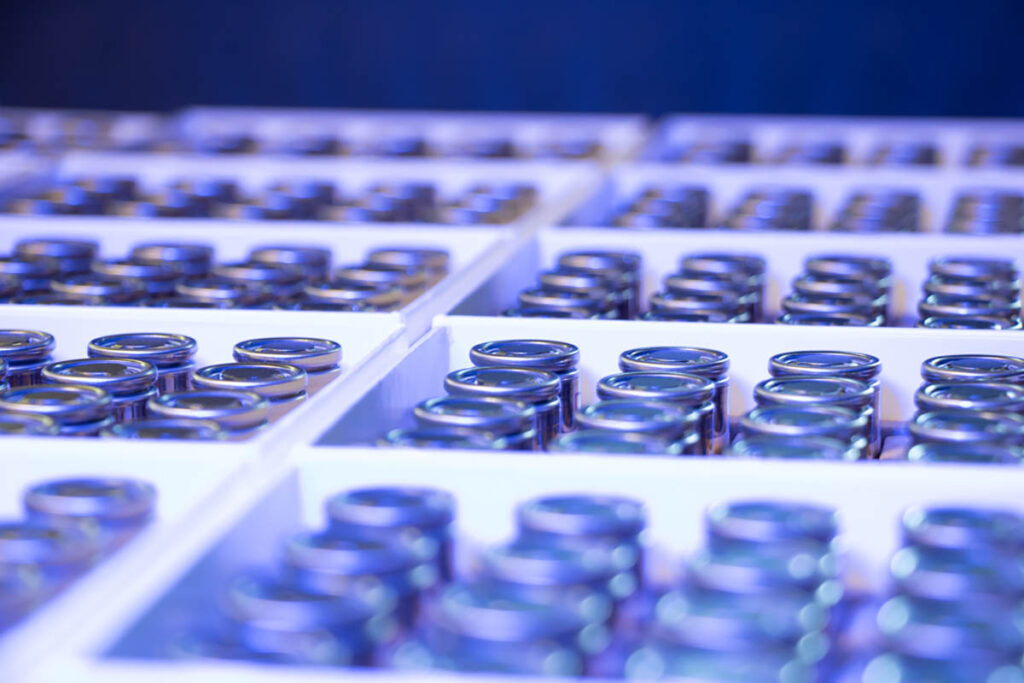
DC fast stations can fully charge an EV in as few as 20 minutes, but it can take up to an hour. Forge’s new battery leverages a metal mixture to increase density and require less time with the plug.
The Colorado-based company’s battery includes a silicon-oxide graphite composite anode and a lithium-nickel-manganese-cobalt oxide to enhance the energy density. According to the company, this combination creates a 20% cost reduction in kWh.
Forge’s Supercell battery improves performance by using active silicon. The device also benefits from increased cathode stability despite the high voltage.
Previous EV batteries used the 18650 cells, measuring 18 millimeters in diameter and 65 millimeters in length. However, Forge’s battery has adopted the newer standard with the 21700 format. Now, the device is 21 millimeters in diameter and 70 millimeters in length.
Forge’s battery marks a new era for EV batteries because of its fast charging. While passenger vehicles are a significant audience, the company says its battery will serve numerous markets.
For example, Forge will continue testing its Supercell battery for electric trucks because more sustainable logistics are necessary. Recent research showed that medium and heavy-duty trucks produced 1.8 billion metric tons of carbon dioxide (CO2) in 2022.
The company will also build the Gen 1.1 Supercell for the Department of Defense, off-highway vehicles, aerospace machines, and motorcycles.
One concern EV drivers have is how long their batteries last. These crucial car parts lose their maximum capacity during charging and discharge cycles.
Forge’s battery improves upon standard longevity through lithium-ion and Atomic Armor technology. The latter is the company’s proprietary ultrathin coating that prevents harmful chemical reactions on battery surfaces.
Clients across industries can also rely on the Supercell’s safety, considering its certification from the United Nations (UN 38.3) and the Underwriters Laboratories (UL 1642).
The new battery technology is transformational for the EV sector. First, it would relieve the traffic at public charging stations. The 2021 Infrastructure Investment and Jobs Act invested $7.5 billion in a national network of EV chargers. More states and cities are building chargers to meet demand, but charging times mean drivers could still wait long before their turn.
Forge’s energy-dense battery could also mitigate problems with range anxiety. Consumers have slowly adopted EVs because they fear they aren’t as good as gas-powered cars.
A 2023 Recurrent survey found that 76% of future EV owners worry about range, though 59% of existing EV owners say it’s not an issue. With Forge’s Gen 1.1 Supercell, driving long distances with an EV is easier. Previous EV models were better for cities than longer commutes, but this device could make road trips and long-haul trucking more feasible.
While the battery news is exciting, EV owners may have to wait a few years before accessing the high-powered packs. Forge said it will start commercial production in 2026. When manufacturing begins, it will occur in the company’s new 277,000-square-foot Gigafactory in Morrisville, North Carolina.
The Colorado-based company said 90% of the Gen 1.1 Supercell’s materials — specifically the cathode and anode components — will come from the United States. Other cell segments will come from South Korea to complete the device.
If the battery is commercially successful, it could spur industry-wide innovation and better batteries for more EV owners. Tesla currently uses 18650 Panasonic batteries, so the EV manufacturer could have the opportunity to improve future models.
Stay tuned for constant Tesla updates. Follow us on:
Google News | Flipboard | X (Twitter) | WhatsApp Channel | RSS (Feedly).
Related News
- Tesla Roadster’s teaser image shows firing SpaceX thrusters, final unveiling date is here, more

- Tesla rolls out FSD v14.3.9 (2026.27.6) with Automatic Collision Evasion: feature details and official release notes

- Tesla Cybercab is the most cost-efficient vehicle to produce, competition doesn’t stand a chance

- High demand for Tesla Cybercab makes it more expensive than Uber and the Model Y Robotaxi

- Tesla (TSLA) opens Cybercabs to the public in Austin, Texas, Robotaxi app tops the charts, more

- Landing catch of Starship in Flight 14 gets environmental clearance from the FAA