

Tesla (TSLA) expanded its Robotaxi service to Dallas and Houston, Texas, over the weekend. Right from the start, the automaker launched the service with Unsupervised Robotaxis in these new cities as well.
Last year, Tesla acquired the state-wide license to operate its Robotaxi service in Texas. This extended general permit and softer regulations allow Tesla to test and expand its Robotaxi service relatively easily.
The launch of the Tesla Robotaxi service was announced both through the company’s official channels and by users who took Tesla’s autonomous ride-hailing service in Dallas and Houston.
Using a Tesla Robotaxi without a human supervisor present in the driver’s seat is the most interesting part of using this service, aka an Unsupervised Robotaxi. The car picks you up and drops you at the destination completely on its own using Tesla’s Full Self-Driving (FSD) AI vision technology.
My first Robotaxi ride in Houston.
— sladoc (@tesla2moon) April 18, 2026
It is unsupervised! @SawyerMerritt https://t.co/x9f3yTLIp5 pic.twitter.com/ICyzpMaLs3
Although Tesla began the Robotaxi service in Houston and Dallas on the weekend, some users have reported disruptions in the last 24 hours. Tesla might have received an overwhelming response, and the service might have reached its capacity.
Tesla’s current Robotaxi service fleet consists of Model Y Juniper electric SUVs. This new Model Y has all the required hardware to process both Supervised and Unsupervised FSD.
Not all the deployed Robotaxi vehicles are Unsupervised. According to an estimate, in Austin, Texas, only 12% of the Tesla Robotaxis were delivering the service without human supervision (unsupervised).
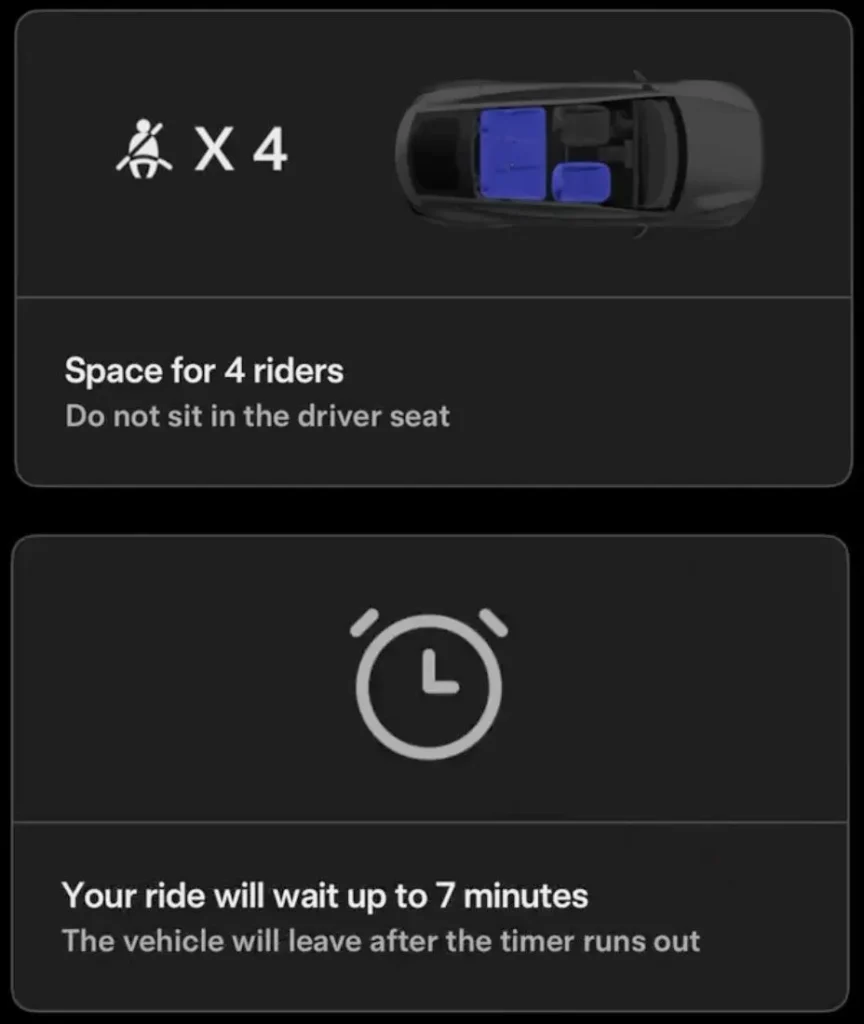
Tesla Robotaxi ride-hailing users are not allowed to sit in the driver’s seat. There’s a cabin camera monitoring the users during the entire ride. Only four persons are allowed to sit in a Tesla Robotaxi (Model Y Juniper). The allowed seats are highlighted in blue on the Tesla Robotaxi app (see screenshot below).
Tesla has also reduced the pickup wait time for a Robotaxi to 7 minutes. After waiting 7 minutes, the Tesla Robotaxi will leave the pickup location automatically.
Tesla Robotaxi is Cheaper than Waymo
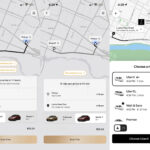
A Tesla Robotaxi ride-hailing user from Dallas, Texas, reported that Waymo asked more than double the price for the same trip. The Tesla Robotaxi app quoted him $6.15, while Waymo asked for $13.93 for the same 2.25-mile and 7-minute trip.
In this case, the Tesla Robotaxi service was around 56% cheaper compared to Waymo’s. The rider chose the cheaper and better option, of course. The Tesla Robotaxi user from Dallas also shared the following video of his unsupervised ride via Sawyer Merritt on X.
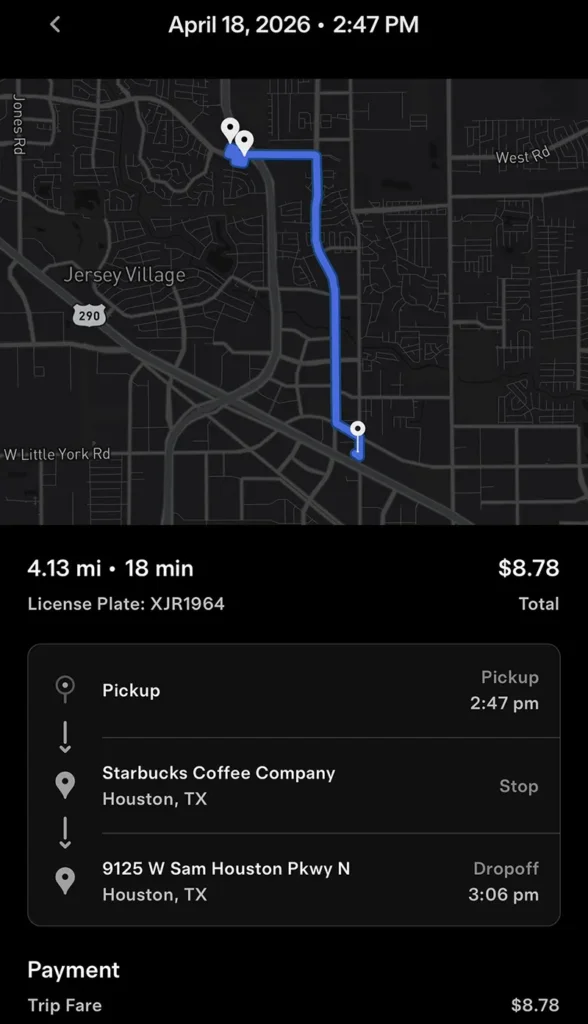
Another Tesla Robotaxi user from Houston, Texas, shared the payment screenshot from the app (see below). For a trip of 4.13 miles and 18 minutes, Tesla charged a total fare of $8.78.
$2 to $3 is the average per-mile cost of hiring a Tesla Robotaxi in Dallas and Houston, based on initial trip data shared by service users. This can vary based on multiple factors, such as time of day, traffic congestion, and whether it’s city or highway streets.

Stay tuned for constant Tesla updates. Follow us on:
Google News | Flipboard | X (Twitter) | WhatsApp Channel | RSS (Feedly).
Related Robotaxi News
- Tesla scales Cybercabs in Texas and halts the number of Model Y Robotaxis
- Tesla Robotaxi and Cybercab fleet in Texas surpasses the 500 mark (420 + 126)
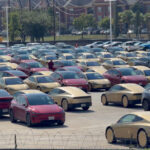
- Large number of Tesla Cybercab robotaxis spotted in Houston, hinting at a launch soon
- First responder training and feedback enhance Tesla Cybercab crash and fire safety
- Tesla Cybercab is the most cost-efficient vehicle to produce, competition doesn’t stand a chance
- High demand for Tesla Cybercab makes it more expensive than Uber and the Model Y Robotaxi


 expands its Robotaxi service in two more cities in Texas. Users share videos and cost of the service compared to Waymo, more.)