
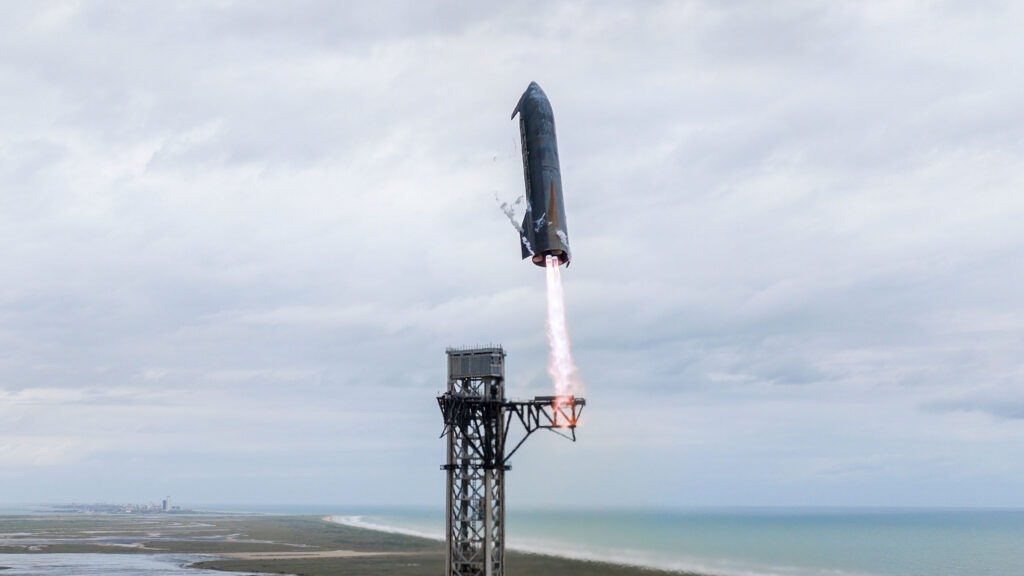
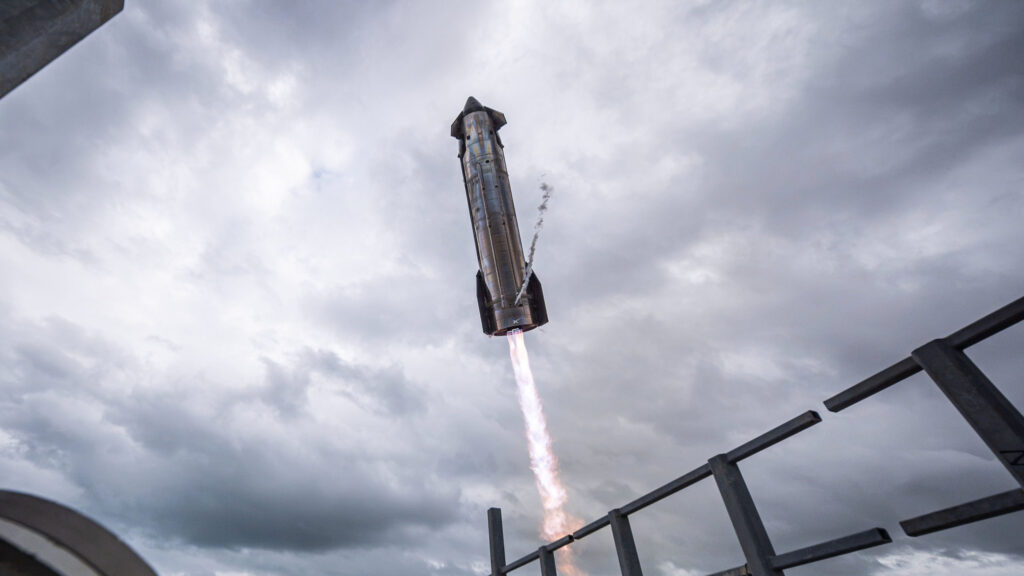
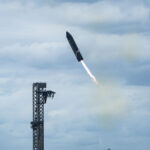
3 > 2 > 1 > 0: This was the sequence of Starship’s engine shutdown during the landing burn as the launch tower’s Chopstick arms held it on return from space.
Although SpaceX has a history of catching the Starship Super Heavy boosters, it was the first-ever landing catch of the upper/2nd-stage Starship spacecraft or any spacecraft in history.
The interesting point is that SpaceX caught Starship on the first attempt. A fumble would’ve resulted in the destruction of the launch pad, the tower, and the propellant tank farm at Starbase.
But this post isn’t about the events, the space journey, or how SpaceX did it. We’ve already covered that in our Flight 15: Epic Story of Starship Catch article.
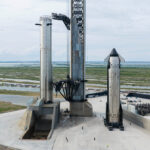
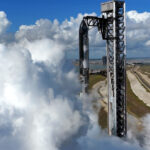
Today, we’re going to focus solely on Starship’s ‘delight for the eyesight’ landing-catch moments. SpaceX shared some stunning imagery of the final moments of the Starship catch, captured on Saturday, November 14, 2026, at Starbase, Texas.
Super Heavy vs. Starship Catch
Starship is a two-stage rocket. The lower, or 1st-stage, is the Super Heavy booster. The upper, or 2nd-stage, is the Starship spacecraft, also called ‘Ship,’ with its production number. For example, Flight 15’s upper stage was Ship 42, or Starship 42.
Similarly, Super Heavy boosters also have assigned numbers. Flight 15‘s Super Heavy rocket had a short name, Booster 22.
A Super Heavy booster’s job is to lift the upper-stage Starship to an altitude (height) where it can push itself into space more easily. It helps Starship cross the maximum aerodynamic drag, or the Max Q (maximum dynamic pressure), in Earth’s atmosphere.
In Flight 15, Starship reached Max Q at T+1 minute 2 seconds, at an altitude of 9.8 km above ground level. However, it separated from Ship 42 (stage separation) well beyond this point, at an altitude of more than 55.5 km, at T+2 minutes 20 seconds.
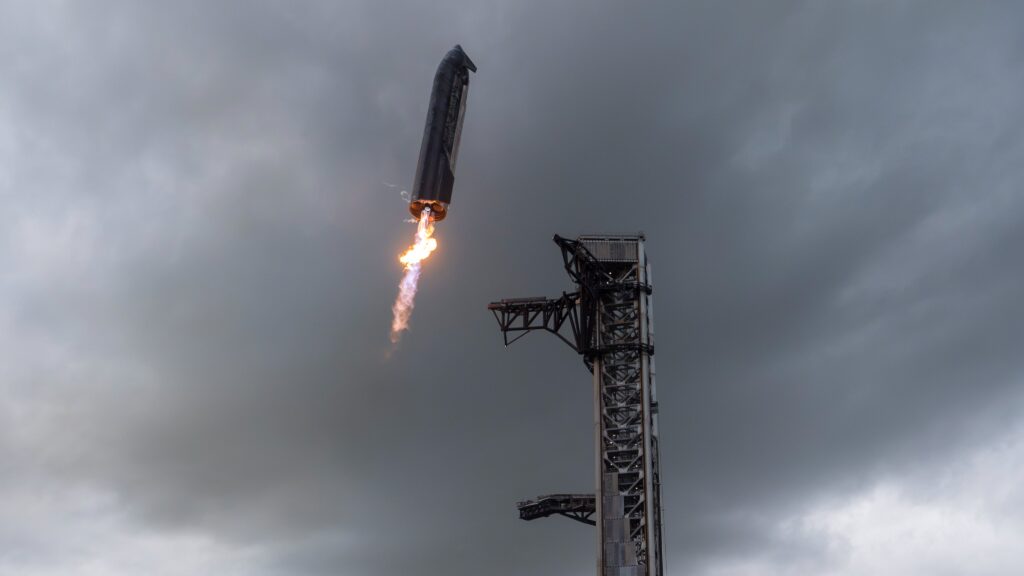
The difference between a booster and ship return is altitude, return velocity, and the reentry burn. The rocket booster doesn’t reach space. Therefore, it doesn’t have to endure the extreme friction and heat of reentering Earth’s atmosphere.
Flight 15 Starship descended from an altitude of 250+ km (155 miles) through a reentry burn. In orbit, Starship reached the maximum speed of ~27,000 km/h (16,777 mph) and coasted at an average velocity of ~22,300 km/h (13,856 mph).
The descent from such a high altitude, decelerating from hyperspeed, and reentry burn take a toll on the ship. Catching such a large object as Starship with the launch tower, with all systems and engines intact, after a ~22-hour coast phase is far more difficult than catching a rocket booster.
“Don’t Panic, S42,” SpaceX wrote on Flight 15 Starship 42. And it didn’t panic at all, landing smoothly in the arms of the launch tower (videos below).
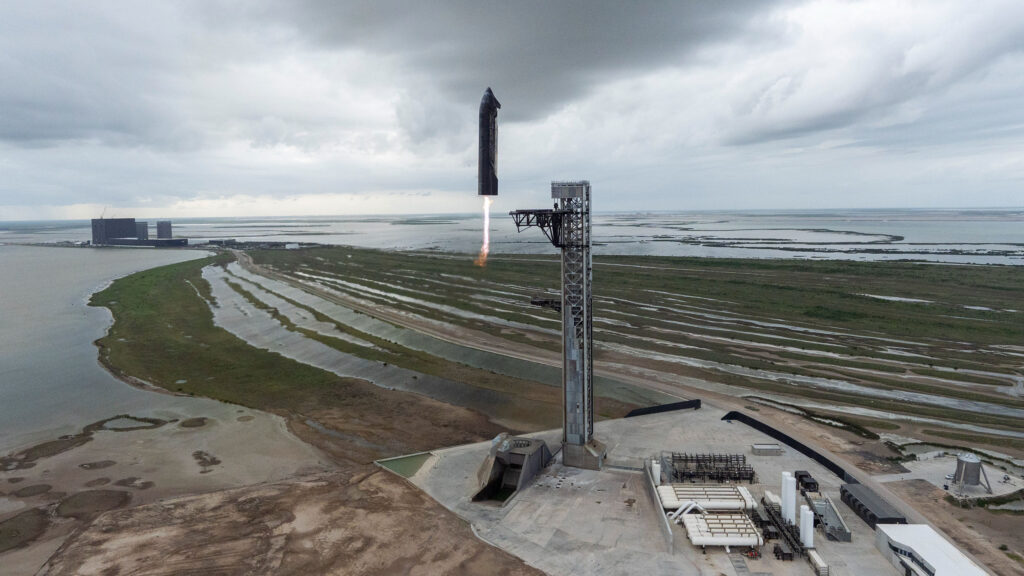
Starship Structural Integrity
The prime goal for Starship is to be a rapidly reliable, reusable rocket. Starship 42’s successful catch has pushed SpaceX one step further in this direction.
SpaceX (SPCX) CEO Elon Musk inspected Ship 42 yesterday. He reported that the ship is in good shape overall. The heat-shield tiles mostly remained intact, and the engines are healthy too.
According to Musk, Starship 42 can be reflown with a few weeks of refurbishment. However, many improvements to the overall systems are needed to make it rapidly reusable like an aircraft.
He wrote on X:
Yeah, I was going over the whole Starship heat shield earlier today. Overall, it looks great. The engines look great too. Ship 42 could probably be reflown with a few weeks of refurbishment.
However, many small fixes are needed to achieve immediate reusability (like an airplane), which requires zero expected refurbishment, apart from scheduled maintenance.
Starship Landing Catch Videos
Stay tuned for future updates on Starship and SpaceX. Follow us on:
Google News | X (Twitter) | Flipboard | WhatsApp Channel | RSS (Feedly).
Related Starship News and Videos
- SpaceX releases stunning imagery of Flight 15 Starship catch, Musk updates on Ship 42 reusability status, more

- The epic story of Flight 15 Starship: ~22 hours in space and a precise landing catch
- Live stream recordings of Starship Flight 15 and live events log archive (liftoff-to-catch coverage)
- The FAA grants SpaceX license for Starship Flight 15, just hours ahead of launch

- Flight 15 Starship double-catch to happen NET Friday the 13th (confirmed)
- SpaceX completes Flight 15 pre-launch static fires and simulations on Starship 42 and Super Heavy (videos)