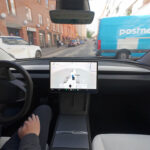
Tesla (TSLA) has rolled out FSD v15 to many early-access car owners. The center of attention in the newest installment of Full Self-Driving is the real-time AI-generated driving visualizations.
The automaker has named it the ‘Tesla Reality View’, and it doesn’t fall short on expectations. Actually, exceeds them by a fair margin.
As the circle of FSD v15 distribution is increasing, Tesla owners are sharing their experiences with the new software. But the current focus is the generative driving visuals that create a virtual reality of what the car sees outside (videos below).
In the FSD v15’s official release notes, Tesla briefly explains how this feature works:
New real-time generative driving visualization that continuously streams a view from an arbitrary virtual camera situated above your vehicle, enabling you to see and control what FSD is planning to do.
FSD v15 Tesla Reality View Videos
It’s amazing to see how accurately the Tesla AI is generating the real-world view and details on the screen. From the design of the buildings, brand logos, road infrastructure, to the type of vehicles that are driving around the ego car (the car running Tesla FSD).
In most of the cases, Tesla Reality View is correctly rendering the surrounding objects. Roughly, the accuracy is more than 90%.
Interestingly, when a Tesla running FSD v15 went by the SpaceX Hawthorne location, it didn’t perfectly render the Falcon 9 rocket and didn’t even recognize the SpaceX wordmark on it. The building was rendered fine, but the details were missing (see video below).
FSD v15 even renders a forest on the screen, and it looks amazing. In one video, the user recorded it rendering ocean waves while driving on a coastal path.
The system doesn’t only work in metro settings. It can identify objects correctly most of the time. Guess Musk was right when he called these renders ‘mind-bending ‘.
The automaker has found a technology breakthrough, as its VP of AI, Ashok Elluswamy, says that the renders don’t take a ton of resources on the FSD inference computer (minimum requirement is Hardware 4 (HW4/AI4).
There are two main processors in a Tesla vehicle. The FSD AI inference computer (HW4/HW4, etc.) and a GPU that handles infotainment and graphics processing.
Somehow, the live renders are mostly processed on the GPU, which doesn’t throttle the FSD Computer much. It’s the simplest explanation of the process. In reality, it’s much more complex, but the logic remains the same.
This is absolutely INSANE Tesla FSD V15 Reality View in a busy downtown setting https://t.co/n4DWxumS7p
— Nic Cruz Patane (@niccruzpatane) November 22, 2026
Stay tuned for constant Tesla updates. Follow us on:
Google News | Flipboard | X (Twitter) | WhatsApp Channel | RSS (Feedly).
Related Tesla FSD News
- FSD v15’s ‘Tesla Reality View’ AI driving visualizations are actually mind-bending (videos)
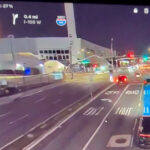
- Tesla FSD v15 (2026.38.6.11): Rollout Begins, Official Release Notes and New Features
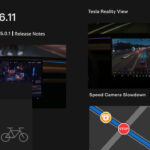
- Tesla FSD v15 to go wide release with the 2026 Holiday Update and mind-bending reality renders in December, says Musk
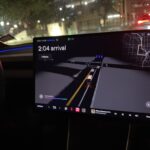
- Tesla update 2026.44.1 goes wide release with FSD v14.3 Lite (HW3), FSD v14.3.13 (HW4) and Charger Network View (Release Notes)
- Tesla puts steering-less Cybercab on sale for $29,990 before the end of 2026, as Musk promised
- Finland approves FSD Supervised, automaker renames it to ‘Tesla Assisted Driving’ in Europe