

Tesla (TSLA) is working to launch its autonomous ride-hailing service using the Cyebrcab vehicles in Austin, Texas. Currently, Tesla is using Model Y Robotaxis without safety monitors in the city.
This launch requires a safe driving experience in the city streets. Therefore, the automaker hasn’t been complacent in training its Full Self-Driving AI Vision neural nets.
Constant training and unique data points ensure maximum safety during Cybercab rides without a steering wheel.
To enhance the safety and experience for its Robotaxi Service customers using the new Cybercab units, Tesla is training its AI for FSD virtually 24×7.
It’s not a coincidence that Tesla’s HQ and Giga Texas, where Cybercabs are manufactured, are located in Austin, Texas, the first city to have functional Cybercabs later this month.
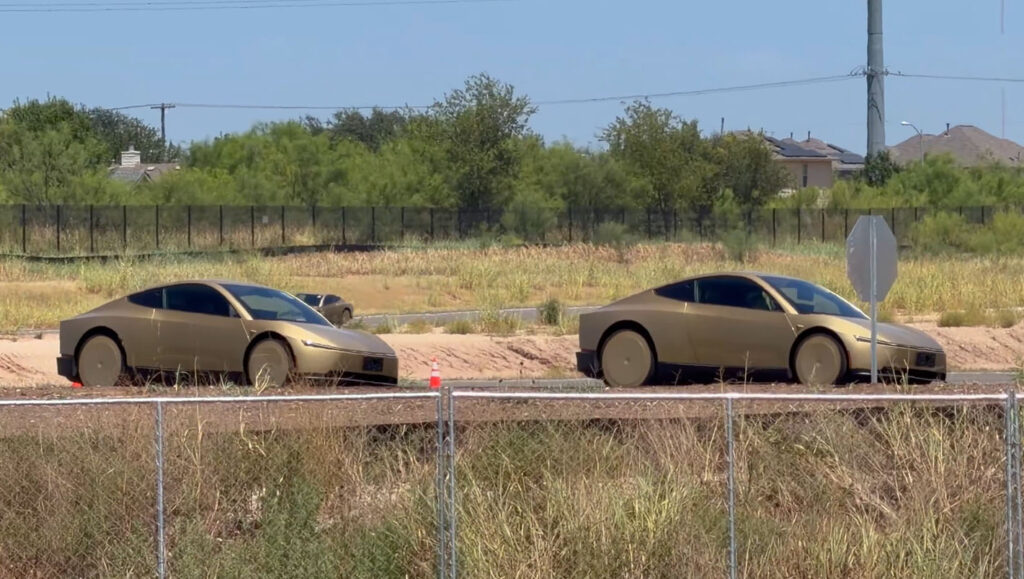
A Tesla enthusiast, David Moss, spotted Tesla Cybercab vehicles being tested to handle a ‘Stop’ sign at the Giga Texas test track. Interestingly, he successfully recorded the following footage of the AI fleet training from 1 Tesla Road (outside the factory).
Tesla has built a test track loop at Giga Texas to test its vehicles (mostly prototypes). However, in this new scenario, it’s using it as a learning track for Stop sign recognition and its handling.
Interesting stop sign testing going on today at Tesla Giga Texas test track & the Cybercab pic.twitter.com/954jJk8g3y
— David Moss (@DavidMoss) August 20, 2026
Multi-Lane Stop Sign Recognition
To recreate a real-world scenario, Tesla engineers let multiple Cybercab robotaxis drive themselves on the Giga Texas test track at once.
Cybercabs drove in both the left and right lanes. Some Cybercabs are just following the vehicles ahead of them.
It’s easy for vehicles on the right-hand side to recognize the Stop sign. However, Cybercabs in the left or middle lane should also be able to stop at the Stop sign.
In the video above, we can see that Cybercabs in the left lane (furthest from the Stop sign) are also stopping correctly. The FSD AI Vision‘s constant monitoring detects signs and signals earlier than human eyesight can.
FSD v15
In the Tesla Q2 2026 Earnings Call, the company’s VP of AI, Ashok Elluswamy, revealed that Cybercabs and Model Y Robotaxis are using earlier versions of Full Self-Driving V15 (FSD v15) software.
FSD v15 is not currently available for Tesla customer-owned vehicles. This major installment of the AI software is made for Unsupervised FSD (no human supervision required).
Customer cars running FSD v14 or earlier use Full Self-Driving (Supervised), which requires constant human monitoring and takeover during safety-related events.
Stay tuned for constant Tesla updates. Follow us on:
Google News | Flipboard | X (Twitter) | WhatsApp Channel | RSS (Feedly).
Related Tesla Cybercab/Robotaxi News
- Tesla Robotaxi and Cybercab fleet in Texas surpasses the 500 mark (420 + 126)
- Large number of Tesla Cybercab robotaxis spotted in Houston, hinting at a launch soon
- First responder training and feedback enhance Tesla Cybercab crash and fire safety
- Tesla Cybercab is the most cost-efficient vehicle to produce, competition doesn’t stand a chance
- High demand for Tesla Cybercab makes it more expensive than Uber and the Model Y Robotaxi
- Tesla (TSLA) opens Cybercabs to the public in Austin, Texas, Robotaxi app tops the charts, more
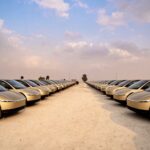


 using FSD v15 ahead of the Austin launch.)