

*Correction: The FAA Public Affairs Department reached out t o us to clarify that the environmental assessment completion does not guarantee a launch license. Read the comment below by Steve Kulm from the FAA for details on this.
Although the final license is not yet in place, I am sure SpaceX will successfully obtain it before the planned launch date.
Looks like everything is working in SpaceX’s (SPCX) favor as Starship’s 14th launch-and-landing test approaches NET September 15.
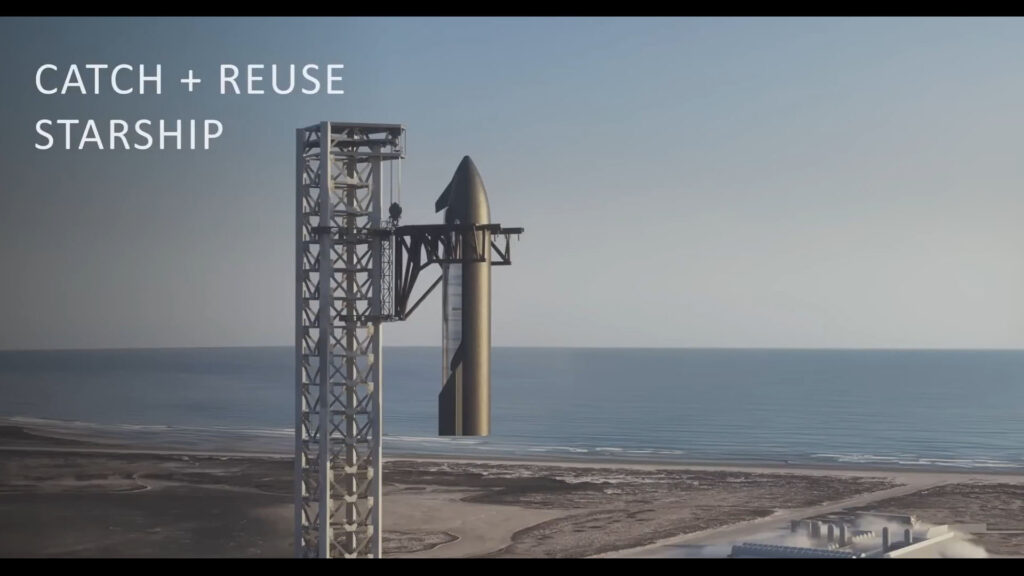
First, the FCC authorized the deployment and frequency band for Starlink V3 for Flight 14. Now, the Federal Aviation Administration (FAA) has cleared the reentry and landing catch of the Starship upper stage in its environmental assessment.
According to the FAA, there’s no environmental hazard in bringing Starship back to Starbase in Boca Chica, Texas, and attempting a catch. I woke up to an email from the FAA in my inbox, breaking the good news.
SpaceX now has both the FCC license and FAA EA clearance to carry out the Starship Flight 14 mission from its launch site at Starbase, Texas.
It’s good that SpaceX was granted these authorizations well ahead of Starship’s next flight. In the past, we have witnessed licensing issues till the last day of a Starship test launch.
Since the required government authorizations are in place well in advance, SpaceX can now focus all its efforts on Starship’s 14th integrated flight test (IFT-14).
In its Tiered Environmental Assessment (EA), the FAA marked the Flight 14 Starship launch as a ‘Finding of No Significant Impact (FONSI) and Record of Decision (ROD)’.
In simple terms, the FAA did not find any potential negative environmental impact or hazard from the upcoming Starship launch.
In addition to the return, SpaceX provided the FAA with an additional contingency trajectory for approval. The FAA document explains the renewed authorization and assessment findings as:
The FAA acted as the lead agency in the preparation of the Final Tiered EA and FONSI/ROD. Under the Proposed Action, the FAA would modify SpaceX’s vehicle operator license to authorize:
Source: The FAA Starship Final Tiered EA
- The expansion of the previously evaluated Hawaii and Central Pacific Landing Area and Southeast Pacific Region Landing Area,
- The addition of a new Northern Pacific Contingency Landing Area in the Northeast Pacific for an Eastern Range to Starbase trajectory, and;
- The authorization of temporary airspace closures associated with an additional Starship reentry trajectory to the Boca Chica Launch Site in Starbase, TX.
Flight 14 Starship Catch
Elon Musk’s team of SpaceX engineers, technicians, and space software experts have been rigorously preparing for Starship’s upper stage catch since last year.
SpaceX modified the Pad 2 launch tower Chopsticks to catch the upper stage. The lower stage Super Heavy rocket booster has been caught multiple times; the upper stage Starship has yet to be caught on landing.
Being smaller than the Super Heavy booster, it should be comparatively easier to catch the Starship. However, this remains to be proven for the first time in the upcoming Flight 14 (expected on September 15, 2026).
After the Flight 13 Starship 40 made a soft, vertical splashdown in the Indian Ocean, SpaceX CEO Elon Musk said that we will attempt to catch the ship on the next flight.
Musk also confirmed in the Q2 2026 SpaceX Earnings Call that an attempt to catch the Starship in Flight 14 will be made. A successful catch will prove Starship’s reusability, which is the ultimate goal of this exercise.
Flight 14 will stand out in the history of Starship launches for two reasons:
- First-ever catch attempt of the upper stage Starship spacecraft (Ship 41)
- Deployment of functioning Starlink V3 satellites in space for the first time
Stay tuned as we bring you the latest updates and live streaming and live coverage of Starship’s 14th flight test.
Stay tuned for future updates on Starship and SpaceX. Follow us on:
Google News | X (Twitter) | Flipboard | WhatsApp Channel | RSS (Feedly).
Related Starship News
- Starship 40 joins three other ships inside SpaceX’s Megabay at Starbase, it’s time for some serious data collection
- Flight 13 Starship 40 returns home to Starbase, Texas, after months at sea
- SpaceX deployed 26 terabits per second of Starlink V3 bandwidth in a single Starship launch (Flight 14)
- Watch Flight 14 Starship launch live stream recordings and read the live updates archive
- SpaceX completes Starship Flight 14 launch rehearsal, gets final FAA approval for launch on Monday, more
- SpaceX (SPCX) President Gwynne Shotwell files to sell $52M worth of the company’s shares



 grants SpaceX (SPCX) the license to catch Starship in Flight 14 launch and landing test.)
In your article, you write: “First, the FCC authorized the deployment and frequency band for Starlink V3 for Flight 14. Now, the Federal Aviation Administration (FAA) has approved the reentry and landing catch of the Starship upper stage.”
The FAA has NOT approved the reentry and landing catch. The completion of the environmental process does not guarantee that the FAA will issue a launch license. SpaceX’s application also must meet FAA safety, risk and financial responsibility requirements. The FAA will make a license determination only after SpaceX provides all outstanding information and the agency can fully analyze it.
Steve Kulm
Public Affairs Specialist
Office of Communications | Federal Aviation Administration
C: 202-255-3663 | [email protected]
Hi Steve,
I have updated the article to reflect the FAA feedback and corrected it.
Thanks for the clarification. Keep enlightening us.
Iqtidar