

Tesla (TSLA) began rolling out FSD v14.3.11 with firmware version 2026.33.5 yesterday. This is the newest version of FSD (Supervised) and FSD v14 as of this writing.
In the first round of the rollout, Tesla is pushing the FSD v14.3.11 (2026.33.5) update to the Early Access Group (experienced owners and select influencers).
Tesla software tracking data from TeslaFi.com and Tessie suggests that FSD v14.3.11 is currently installed on less than 1% of the Tesla fleet. FSD v14.3.11 is specific to the Hardware 4 (HW4/AI4) vehicles.
Release notes for FSD v14.3.11 are the same as the previous version and include the Automatic Collision Evasion feature (see below).
The automaker is also rolling out FSD v14.3 Lite with the same 2026.33.5 firmware version for Hardware 3 (HW3) cars simultaneously.
Some early-access FSD users, like Black Tesla / YouTube, have shared their first impressions of version 14.3.11, which you can watch below.
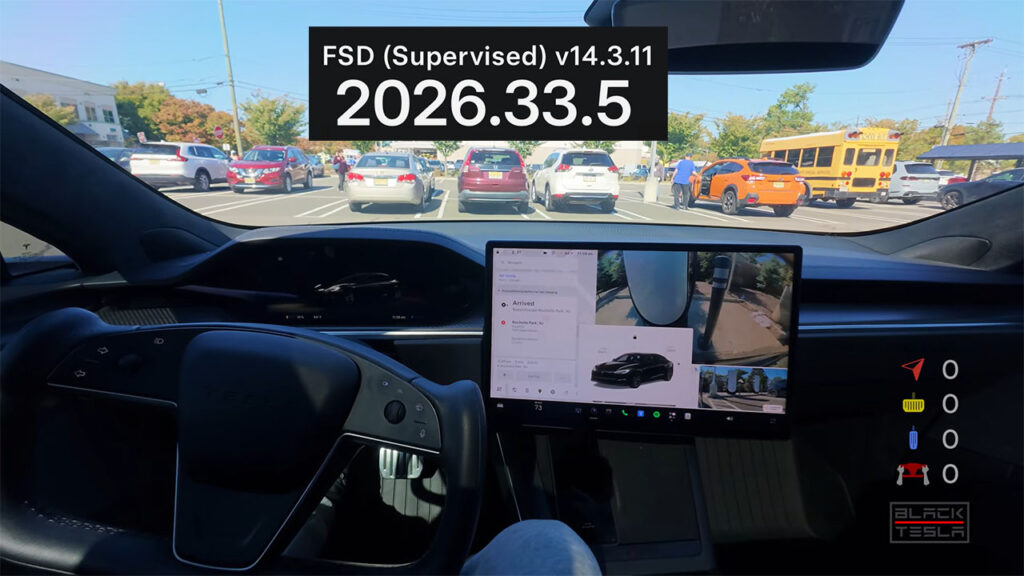
Tesla FSD v14.3.11 First Impressions
Black Tesla is one of the first ones to try the new FSD v14.3.11. He tests Tesla Full Self-Driving on New York City and Manhattan streets.
In previous versions, FSD struggled with unprotected left turns (UPLs) in NYC. According to the Black Tesla, it’s now a piece of cake for FSD v14.3.11. In the following video, he showed how smoothly his Tesla Model S Plaid took this UPL using FSD v14.3.11.
Tesla FSD v14.3.11 makes smooth stops and comes to a full stop at intersections even when there is no traffic or vulnerable road users (VRUs/humans, pets, cyclists, etc.).
“Super smooth, composed, confidence-inspiring. Confident and intentional with its maneuvers,” he described FSD v14.3.11’s behavior while driving.
FSD tester completed his ~25-minute drive using FSD v14.3.11 without a single intervention. The car also parked itself perfectly in a parking lot at the end of the test loop.
FSD v14.3.11 (2026.33.5): Official Release Notes
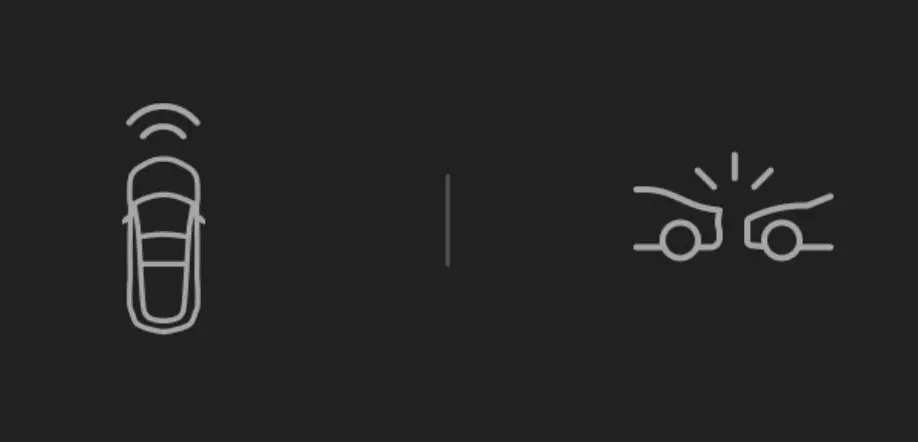
Automatic Collision Evasion
Automatic Collision Evasion activates Full Self-Driving (Supervised) to try to keep your vehicle safe and then continue driving. It can engage in the following situations while you are driving manually:
Scenario 1: A frontal collision is imminent and braking alone may not avoid it.
Scenario 2: Your vehicle detects that you are not sufficiently attentive to the road (for example, reaching toward the back seat), or that Full Self-Driving (Supervised) may have been unintentionally disengaged.
See your Owner’s Manual for more details.
Full Self-Driving (Supervised) v14.3.11 includes:
- Upgraded the Reinforcement Learning (RL) stage of training the FSD neural network, resulting in improvements in a wide variety of driving scenarios.
- Upgraded the neural network vision encoder, improving understanding in rare and low-visibility scenarios, strengthening 3D geometry understanding, and expanding traffic sign understanding.
- Rewrote the AI compiler and runtime from the ground up with MLIR2, resulting in 20% faster reaction time and improving model iteration speed.
- Mitigated unnecessary lane biasing and minor tailgating behaviors.
- Increased decisiveness of parking spot selection and maneuvering.
- Improved parking location pin prediction, now shown on a map with a (P) icon.
- Enhanced response to emergency vehicles, school buses, right-of-way violators, and other rare vehicles.
- Improved handling of small animals by focusing RL1 training on harder examples and adding rewards for better proactive safety.
- Improved traffic light handling at complex intersections with compound lights, curved roads, and yellow light stopping – driven by training on hard RL examples sourced from the Tesla fleet.
- Improved handling for rare and unusual objects extending, hanging, or leaning into the vehicle path by sourcing infrequent events from the fleet.
- Improved handling of temporary system degradations by maintaining control and automatically recovering without driver intervention, reducing unnecessary disengagements.
- Unified the model between Actually Smart Summon, FSD, and Robotaxi for more capable and reliable behavior.
- Actually Smart Summon max speed is now increased to 8mph (13km/h).
- Help Tesla improve Self-Driving by selecting an intervention reason on the main screen after taking over.
- You can now see distance traveled in FSD (Supervised) without an intervention. The Self-Driving App will also show your longest intervention-free streak.
- Parking options now display on the map when arriving at your destination.
Upcoming Improvements
- Expand reasoning to all behaviors beyond destination handling.
- Add pothole avoidance.
Acronyms used:
- RL = Reinforcement Learning
- MLIR = Multi-Level Intermediate Representation (MLIR)
- FSD = Full Self-Driving
- AI = Artificial Intelligence
Stay tuned for constant Tesla updates. Follow us on:
Google News | Flipboard | X (Twitter) | WhatsApp Channel | RSS (Feedly).
Related Tesla FSD Updates News
- Tesla begins the FSD v14.3.11 (2026.33.5) update rollout (first impression videos, release notes)
- Tesla FSD becomes a sales driver, millionaire realtor replaces all his company cars with Tesla EVs
- Tesla rolls out FSD v14.2 Lite: legacy Tesla owner reviews, rollout status
- Tesla rolls out FSD v14.3.9 (2026.27.6) with Automatic Collision Evasion: feature details and official release notes
- Unsupervised Tesla Cybercabs roam the streets of Austin ahead of launch (videos)
- Tesla merges FSD v14.3.8 and the Summer Update (2026.26.6.5), Grok voice commands gain more control


 begins the FSD v14.3.11 (2026.33.5) rollout and early access Tesla owners give their first impressions (videos). Official release notes, more.)