
A report by the NASA Scientifically Calibrated In-Flight Imagery (SCIFLI) team has revealed that the observation of the SpaceX Starship reentry to Earth’s atmosphere after orbital launch is pushed to March 2022. In layman terms, the first-ever Starship orbital flight test is expected to happen as early as March next year.
Previously Elon Musk and SpaceX estimated the Starship orbital flight to happen towards to the end of 2021 but now it seems it has been pushed a few months further.
SpaceX started preparing the Starship SN20 prototype spaceship for the orbital launch as soon as the SN15 completed its high-altitude flight test and a succssful landing at Starbase on Wednesday, May 5 2021.

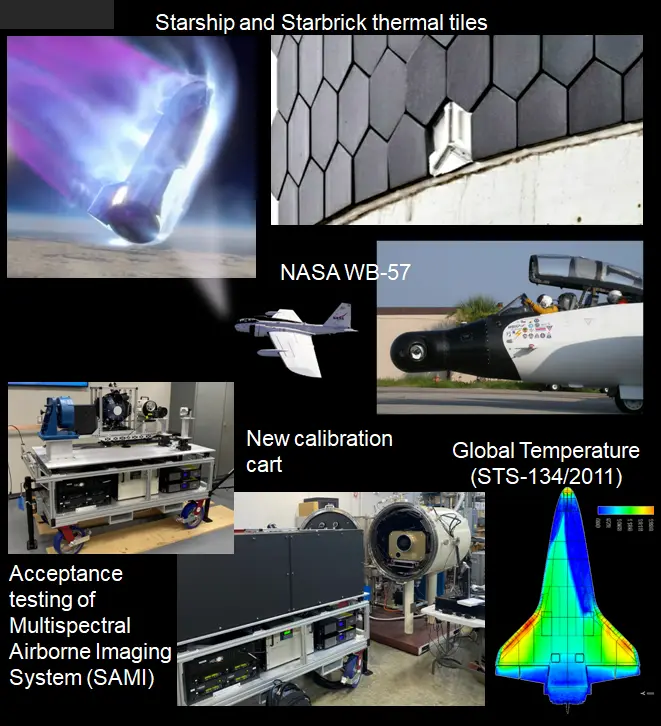
The NASA SCIFLI team will provide SpaceX with thermal data and imagery for the Starship hypersonic reentry burn to atmosphere using calibrated infrared cameras. SpaceX has almost completed the installation thermal protection system (TPS) tiles on Starship 20. The SCIFLI report refers to these tiles as “Starbricks”.
This thermal reentry data provided by NASA wil help SpaceX improve upon its TPS technology and minimize heat-releated risks on entry burns in future human and cargo missions.
Project Overview
The NASA Scientifically Calibrated In Flight Imagery (SCIFLI) team seeks to demonstrate enhanced remote observation instrumentation technology for obtaining global surface temperature on a commercial spacecraft returning from low Earth orbit. The product provides non-invasive measurements on an integrated vehicle in an actual hypersonic flight environment that will increase overall mission capability via more accurate modeling/design tools and inform on vehicle in-situ thermocouple performance.
Technical Approach
A high-resolution observation during reentry using calibrated infrared cameras will be used to monitor surface temperature of the entire lower surface of the Starship spacecraft during hypersonic reentry. To perform the thermal observation, the NASA is developing an advanced multispectral imaging system that will be flown on a NASA high- altitude WB-57F research aircraft. The resulting calibrated measurements will inform modeling efforts and anchor surface temperatures inferred from embedded thermocouples.
Results/Summary
Fabrication nearing completion on Artemis-sponsored imaging system. Observation planning process initiated. Material samples to be tested to determine surface emissivity. Targeting Starship reentry observation opportunity near March 2022Starship and Starbrick thermal tilesNASA WB-57Global Temperature (STS-134/2011)New calibration cartAcceptance testing of Multispectral Airborne Imaging System (SAMI).
Contributing Partners
HEOMD & SBIR: Funding from Artemis and SBIR Programs for sensor and calibration hardware; CCSC funding for a WB-57 flight test to assess/verify integrated SAMI imaging system performance against an upcoming SpaceX Starship orbital flight test.DoD: potential partnership to obtain directional and spectral emissivity of thermal protection tiles to catalog in a national database.
Infusion and Transition Plan
Current state-of-the-art thermal protection systems (TPS) (e.g. ablators, ceramic tiles, reinforced carbon carbon) typically require significant maintenance between flights (i.e. inspection, repair, replacementtime, cost).
Starship’s TPS is intended to provide a dramatic leap forward by demonstrating operational reuse, requiring minimal to no maintenance between flights.
A validated design using flight data from NASA’s SAMI imaging system would have a dramatic impact on the commercial space economy by offering a lower marginal launch cost per kg to low Earth orbit. SpaceX’s goal is to further reduce the cost of access to space with Starship by 1 to 2 orders of magnitude relative to its Falcon 9 launch vehicle.
Rapid reusability of the entire Starship launch system—including its heatshield technology—is critical for achieving this reduction. Thus, this partnership with NASA will allow SpaceX to enable the first-ever fully reusable orbital launch and entry vehicle.
Source: NASA SCIFLI technical report no. 20210020835
| CCSC | Collaborations for Commercial Space Capabilities |
| DoD | Department of Defense |
| HEOMD | Human Exploration and Operations Mission Directorate |
| SAMI | SCIFLI Airborne Multispectral Imager |
| SBIR | Small Business Innovation Research |
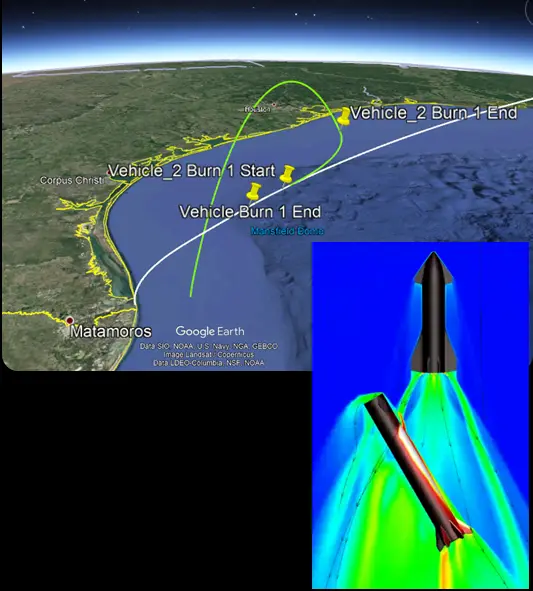
Back in 2014, NASA provided SpaceX with similar infrared thermal imagery for the Falcon 9 Dragon CRS-4 AsiaSat launch. NASA also released the following thermal imaging video of the Falcon 9 first-stage re-entry that provided valuable insights to SpaceX for future Falcon 9 missions.
Stay tuned for future updates on Starship and SpaceX. Follow us on:
Google News | X (Twitter) | Flipboard | WhatsApp Channel | RSS (Feedly).