

SpaceX conducted a static fire test on the Flight 5 Super Heavy rocket booster yesterday.
This specific version of the Super Heavy rocket is called Booster 12 and is intended to be used for the upcoming 5th flight test of the fully integrated Starship (IFT-5).
SpaceX moved the 71-meter tall Super Heavy Booster 12 to the Orbital Launch Mount (OLM) at Starbase last week. Elon Musk’s spacecraft and commercial spaceflight company performed multiple tests on this specific booster during the last few days.
On Thursday 12th July, SpaceX conducted a cryogenic pressure proof testing on Booster 12. This test is performed to check the structural integrity of the rocket booster or a spaceship such as Starship. On the next day (Friday 13th July), the Super Heavy booster went though a spin prime test.
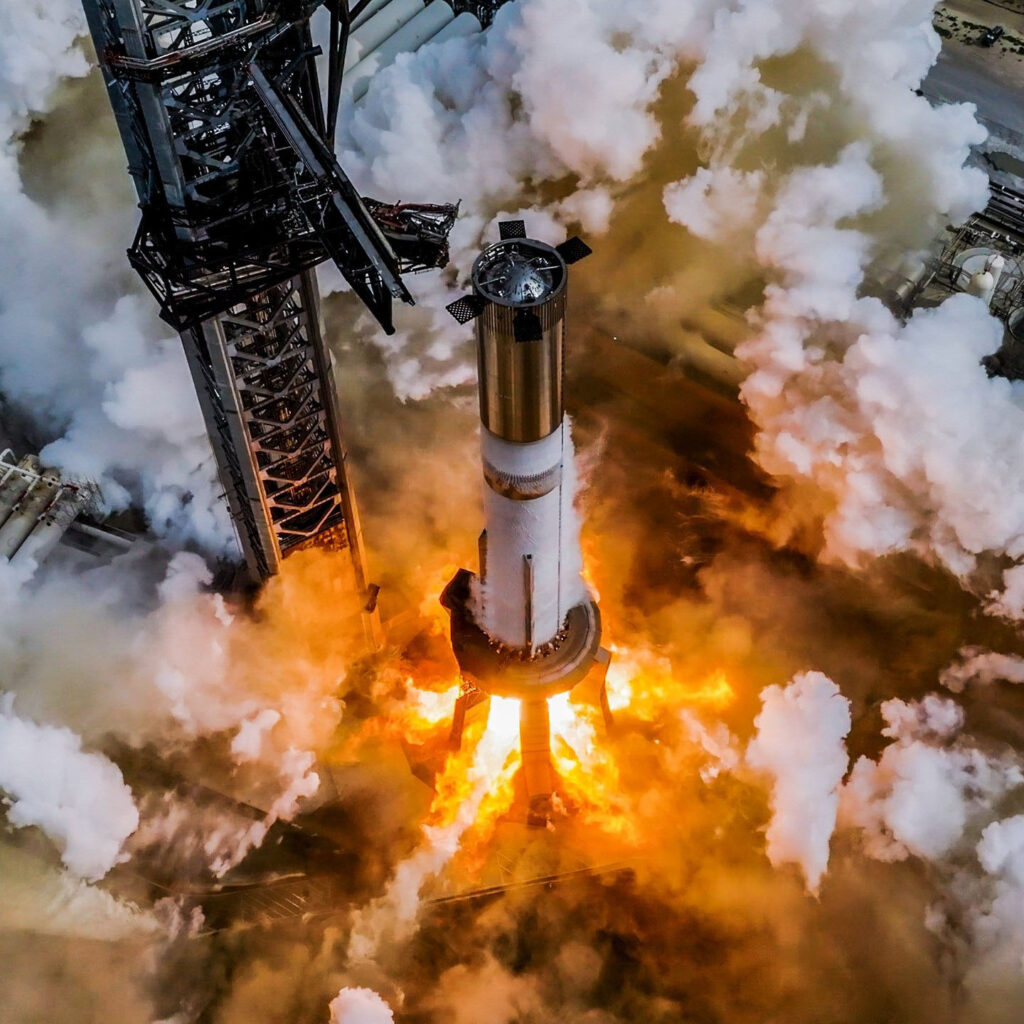
The success of the cryo and cold engine spin-up tests were a solid hint towards the next phase — static fire testing. Interestingly, this time, SpaceX directly went for a full spectrum of 33-engines for the first static fire test on the Starship Flight 5 Super Heavy Booster 12.
According to NASASpaceFlight, at the time of the static fire test yesterday (Mon 15th July 2024), Booster 12 was the only space vehicle not grounded at the Starbase, Texas. This isn’t normally the case at this orbital launch site as SpaceX is working on multiple vehicles and their components simultaneously.
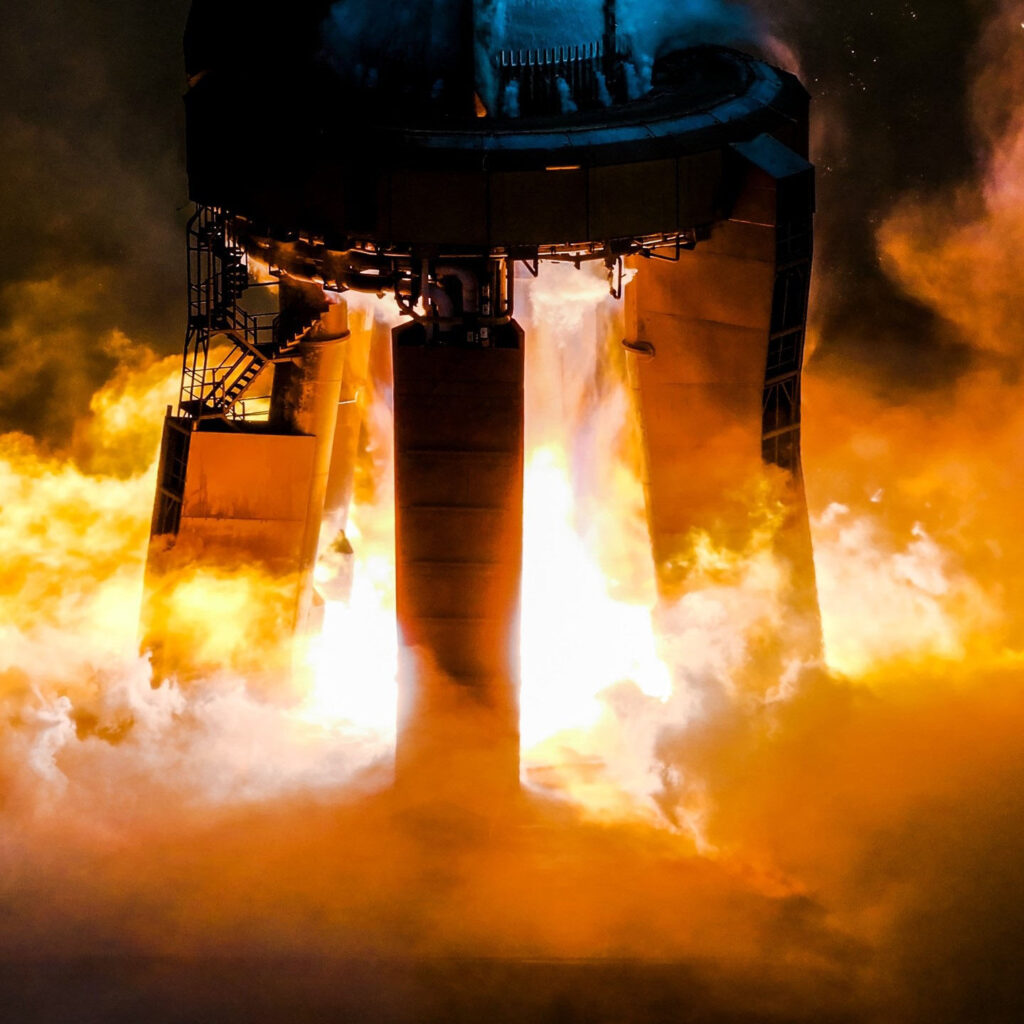
According to SpaceX, this was a full duration static fire test. Normally, a full duration static fire is 6 seconds long for Starship and Super Heavy. The official videos shared by SpaceX are actually slow motion as the one we see above.
I was able to calculate the duration of the Booster 12 static fire test by looking at the NASASpaceFlight video it was around 7-8 seconds without on normal playback speed (watch below).
33 Raptor 2 engines firing for 6+ seconds bolted on the launch pad is unimaginable intense fire and temperatures (203 tons of downward thrust). SpaceX first triggers water from the OLM deluge system approx 1-2 seconds before the engines start firing and the water keeps pushing up another 1-2 seconds after the engines are off.

Stay tuned for future updates on Starship and SpaceX. Follow us on:
Google News | X (Twitter) | Flipboard | WhatsApp Channel | RSS (Feedly).
Related
- SpaceX to conduct Flight 14 Starship orbital launch on September 22, no landing catch is planned
- Tesla Roadster’s teaser image shows firing SpaceX thrusters, final unveiling date is here, more
- Landing catch of Starship in Flight 14 gets environmental clearance from the FAA
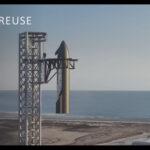
- FCC filing reveals Starship Flight 14 launch on September 15, SpaceX conducts 33-engine static fire on Booster 21
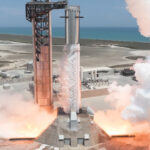
- Starship 40 begins its journey from the Indian Ocean back home to Starbase, Texas
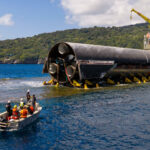
- After Starship’s 60-second 6-engine static fire, SpaceX rolls out Flight 14 Booster 21 for pre-launch testing


.)