According to the US Federal Aviation Administration (FAA), SpaceX’s Starship Flight 12 Super Heavy rocket booster experienced an anomaly during the testing mission on May 22.
Because of this anomaly during the landing phase of the Booster 19 rocket, the FAA has asked SpaceX to conduct a mishap investigation.
During the live coverage of the Flight 12 launch, we noticed that the Super Heavy Booster 19 shut all of its engines unexpectedly after stage separation and during its landing.
This caused an uncontrolled velocity and attitude (angle of descent). Even with the anomaly, the Flight 12 Booster 19 rocket landed in the Gulf of America, where it was originally intended to make a splashdown landing.
However, due to an engine malfunction on its way back to Earth, Booster 19 didn’t make a soft splashdown landing. This means that there was no engine thrust to slow down and make a soft landing. Unexpected engine cutoff resulted in a hard splashdown landing.
The FAA counted this event as an anomaly. This anomaly caused six departure delays, five airborne holding events, and no aircraft diversions, the FAA stated in an update on its official website on May 22.
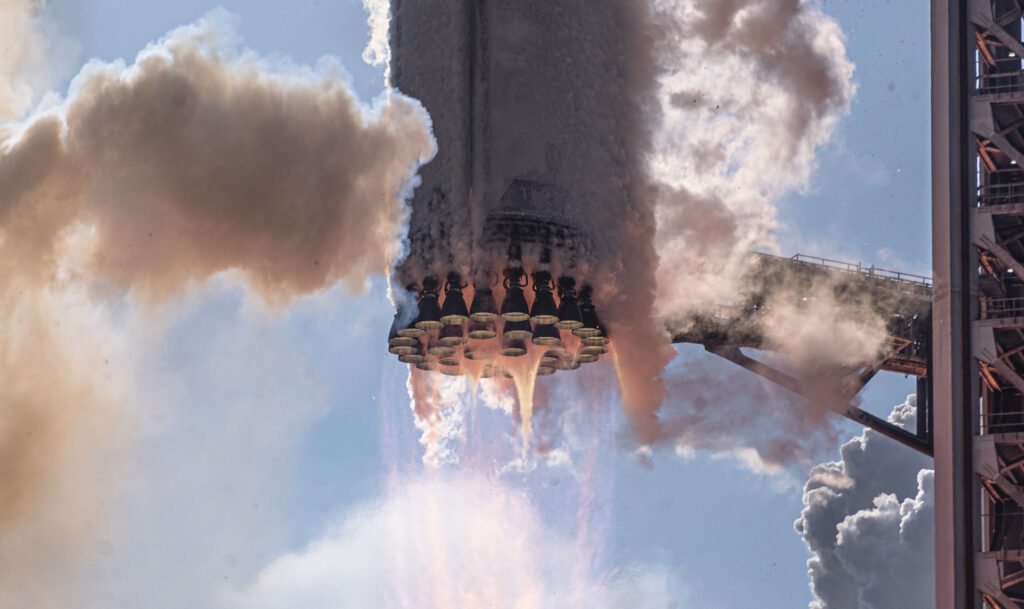
In another general statement released on May 27, the FAA clearly mentioned that this anomaly requires a mishap investigation. The FAA wrote:
AA Requires Mishap Investigation of SpaceX Starship Flight 12
After a thorough assessment of the operation, the FAA has determined the May 22 SpaceX Starship Flight 12 launch resulted in a mishap. The mishap involved the Super Heavy booster as it flew back to the Gulf of America after stage separation. There are no reports of public injury or damage to public property.
The FAA is requiring SpaceX to conduct a mishap investigation. The FAA will oversee the SpaceX-led investigation, be involved in every step of the process, and approve SpaceX’s final report, including any corrective actions.
Interestingly, SpaceX published multiple landing videos of the upper stage Flight 12 Starship 39 spacecraft, but did not share the same for the lower stage Super Heavy Booster 19. Of course, it wouldn’t be a great sight.
From time to time, the FAA requires commercial space companies to conduct mishap investigations. These investigations are closed once the operator satisfies the federal agency on its mitigation strategies to avoid such an incident in future launches.
However, until the mishap investigation is marked closed, SpaceX will not be able to launch another Starship. It can take anywhere from weeks to months
For example, on May 22, the FAA closed a mishap investigation on Jeff Bezos-owned Blue Origin’s NG-3 Mission. The launch was conducted on April 19.
Stay tuned for future updates on Starship and SpaceX. Follow us on:
Google News | X (Twitter) | Flipboard | WhatsApp Channel | RSS (Feedly).
Related SpaceX Starship News
- Flight 13 Starship 40 returns home to Starbase, Texas, after months at sea
- SpaceX deployed 26 terabits per second of Starlink V3 bandwidth in a single Starship launch (Flight 14)
- Watch Flight 14 Starship launch live stream recordings and read the live updates archive
- SpaceX completes Starship Flight 14 launch rehearsal, gets final FAA approval for launch on Monday, more
- SpaceX (SPCX) President Gwynne Shotwell files to sell $52M worth of the company’s shares

- Starship Flight 14 gets delayed, SpaceX moves Booster 21 to Starbase launch pad, more