

Tesla (TSLA) is continuously moving in the direction of autonomy. In the past few years, the pace was comparatively slow.
However, with the advent of FSD v14 and autonomous Model Y Robotaxis in Austin, Texas, the automaker’s strategy is shifting to higher velocity.
Tesla Cybercab was revealed during a hyped event at the Warner Bros. Studios in October 2024. However, the automaker did not go very deep into the specifications of the vehicle at the time.
In a recent regulatory filing with the US Environmental Protection Agency (EPA), important specs like battery pack size, range, curb weight, and GVWR were revealed (details below).
These specifications have kind of leaked, unintentionally or maybe before Tesla wanted them to. Although Tesla has started production of the Cybercab at Giga Texas, the company hasn’t yet offered the vehicle for sale and hasn’t included it in its Robotaxi Service fleet in Austin, TX, or the Bay Area, CA.
Tesla Cybercab is a specialized two-seat vehicle, solely intended for autonomous ride-hailing services (robotaxi). Current production vehicles don’t have a steering wheel. However, teardown expert Sandy Munro thinks that Tesla might launch the same vehicle with a steering wheel in the future.
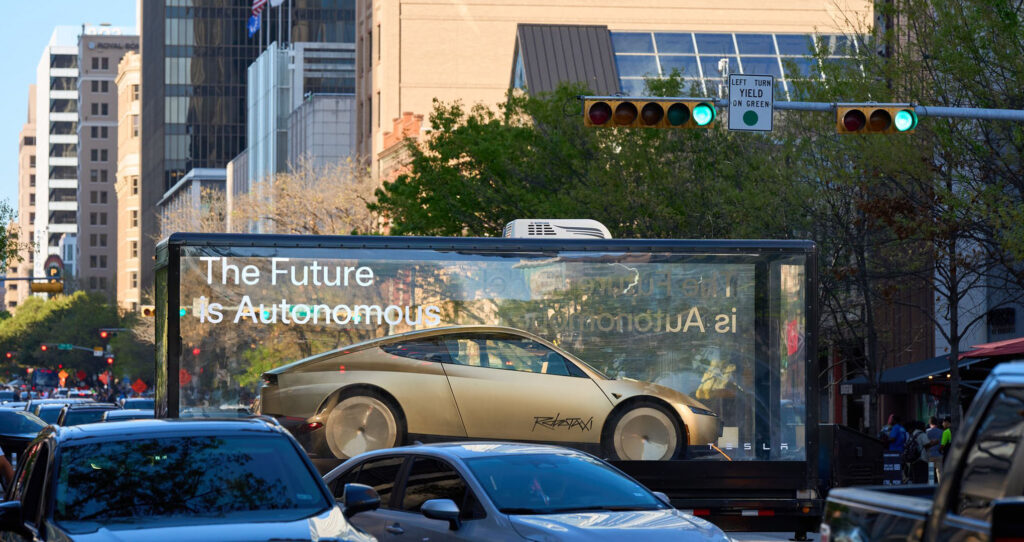
Tesla Cybercab Specs
The Tesla EPA filing for environmental compliance reveals the following specifications of the Tesla Cybercab robotaxi vehicle (PDF below):
- Front-Wheel Drive (FWD)
- Regenerative Braking: Yes (source: front wheels)
- Battery type: Lithium-ion
- Battery capacity: ~48 kWh
- Horsepower: 219 hp
- Curb weight: 3,113 lbs
- GVWR: 3,730 lbs
- Motor power: 163 kW
- Voltage: 326 V
- Range: 418 miles (375 miles on highways)
Historically, Tesla’s electric vehicles have been basically rear-wheel drive (RWD). Only the all-wheel drive (AWD) variants get motors in the front to provide more power and traction to the wheels.
Tesla Cybercab is the first-ever Tesla car that is basically a front-wheel drive (FWD). The automaker decided to have the powertrain in the front of the Cybercab, most probably because these vehicles will drive themselves all the time. There’s no factor of human driving pleasure.
Since this is also a small car, ride-hailing users will store luggage in the rear trunk of the Cybercab. Tesla might have decided to install the powertrain in the front to have more space in the rear of the vehicle.
Tesla Cybercab Range
The EPA has given Tesla Cybercab an estimated range figure of 418 miles (~673 km). For highway-only driving, it’s reduced to 375 miles (~603 km).
Previously, Tesla has mentioned Cybercab’s range at 300 miles (~482 km). On the final rating, EPA might reduce the Cybercab’s range, so we still have to wait until the vehicle is added to EPA’s database of EVs and Tesla models to get the final number on range.
Cybercab Battery Capacity
The EPA document states the battery capacity of the Tesla Cybercab in Amp-Hours (Ah). The majority of the EV and Tesla Community is used to battery pack sizes in kilowatt-hours (kWh).
EPA has listed Tesla Cybercab battery capacity as 146 Ah. The voltage of the battery is noted as 326 volts. To convert it to kWh, we need to use the following formula:
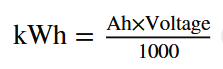
So, we will have to multiply amp-hours by voltage and divide the result by 1000. So, by multiplying 326 x 146 and dividing it by 1000, we get 47.596 kWh (almost 48 kWh).
Tesla Cybercab EPA Compliance PDF
Related Robotaxi News
- Here’s how to win a chance to attend the Cybercab launch event, Tesla holds the date announcement

- Tesla (TSLA) gears up for Cybercab robotaxi launch, leases an 80 wireless charger location in Austin, Texas
- Tesla launches Robotaxi Service in two more Florida cities
- Tesla reveals the integration of Starlink V5 in Cybercab robotaxi vehicles, and how that’s great for SpaceX
- Tesla expands Robotaxi Service to Miami, watch the first impressions, and issues users faced
- Tesla tests Cybercab robotaxis on Austin roads without a steering wheel or any pedals


 files and EPA compliance that reveals Cybercab robotaxi's specs like battery capacity, range, voltage, powertrain, and motors, etc.)