
The United States federal government allocated $7.5 billion in 2021 toward a national electric vehicle (EV) charging network, but more progress is necessary for this initiative to succeed. Over two years have passed, and only New York and Ohio have constructed new stations under this program.
In December 2023, Ohio opened a charging station using federal funds in Columbus, the state capital. The EVgo machine can charge four vehicles in about 40 minutes, depending on their battery levels. Kingston, New York became the state’s first city to use federal money for a high-speed charger.
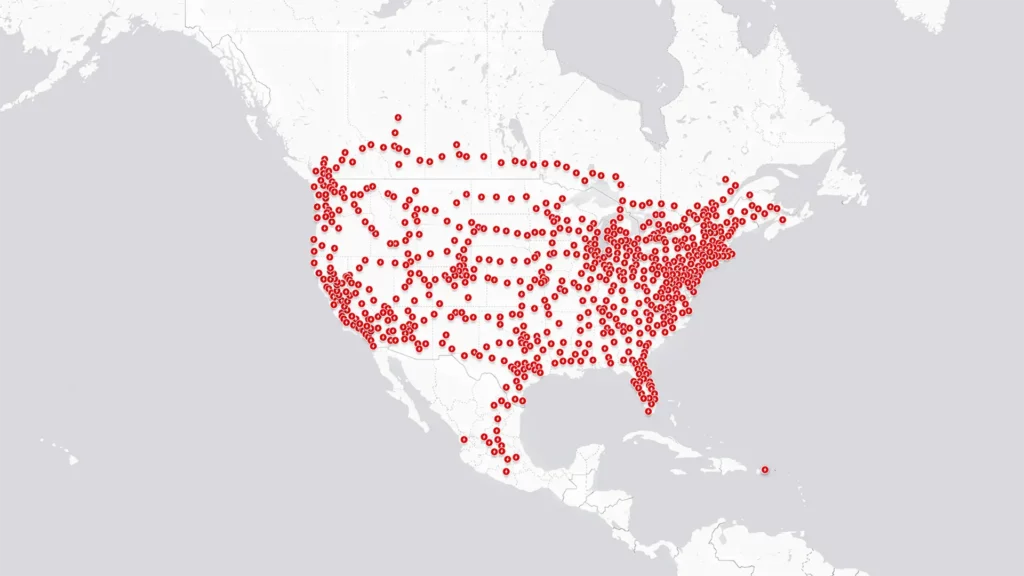
Slow construction has hindered progress in making the country less dependent on fossil fuels and more effective with its electrical grids. President Biden’s goal is to have 500,000 chargers nationwide by 2030, but the slow rollout could lead America to fall short of that goal. The Department of Energy (DoE) says the U.S. has over 162,000 EV chargers and 61,000 stations.
The president signed the infrastructure law in November 2021, and the Department of Transportation has dispersed about $2 billion in funds to various cities and states for their charging projects. However, states have demonstrated different levels of progress in their charger construction.
For instance, the Tennessee Department of Transportation did not review bids until November 2023 because of the intricate process. Now, in early 2024, the Volunteer State has begun awarding bids to various projects, such as a $21 million initiative to bring 30 EV charging stations along interstates and U.S. highways.
Federal guidelines have been one reason for a delay in implementation, considering the lengthy standards for grant money. The Federal Highway Administration (FHWA) and DOT published minimum infrastructure requirements to standardize payment methods, charger speeds, and functionality of chargers.
One federal requirement is the chargers must work at least 97% of the time to meet federal funding, considering the high demand for EV charging in some areas. California Tesla owners have seen how crowded the superchargers are due to the congestion and long wait times.
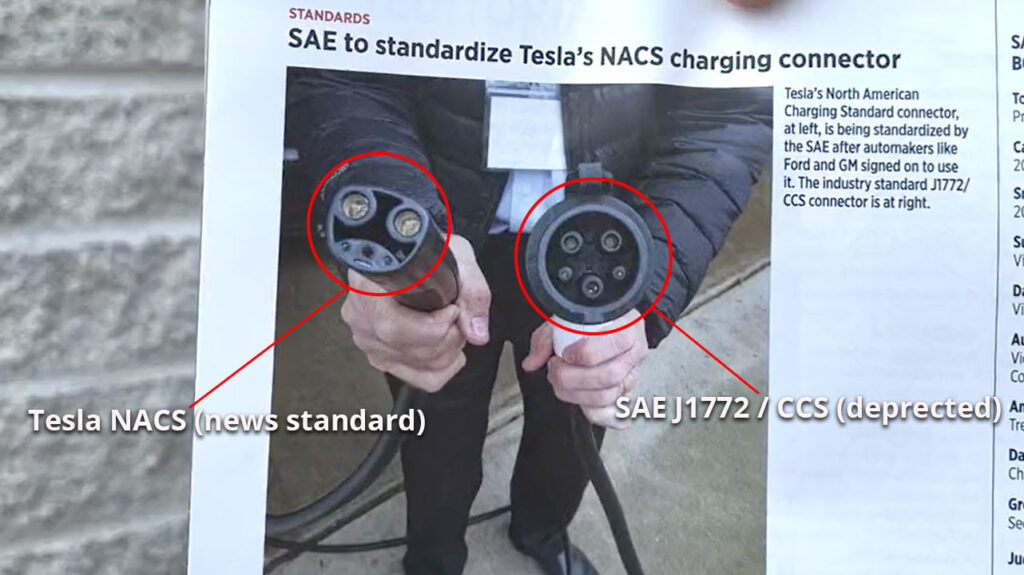
Another slowdown has come from states deciding how to regulate chargers for the various automakers. For example, Texas has mandated EVs use the same charging plugs — despite Teslas long having the advantage with powerful chargers.

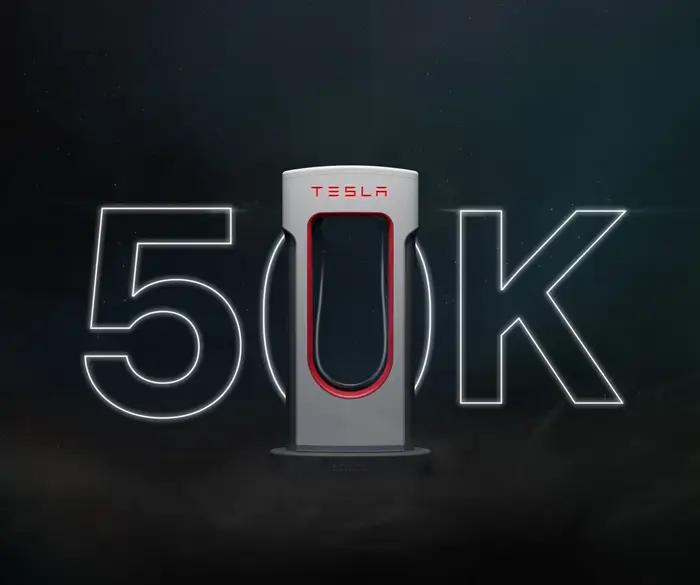
Last year, on the 11th anniversary of the first supercharger, Tesla built its 50,000th charger in Roseville, California. More states could fall in line behind Texas in mandating the new stations implement uniform chargers to fit EVs from all automakers.
Standardizing the chargers will be crucial as EV demand grows outside large cities and into less urban areas. Experts say EVs will comprise 32% of new cars by 2030, so building a resilient infrastructure will help meet the increasing demand.
While 500,000 chargers is an ambitious goal, some experts say more is necessary. The National Renewable Energy Laboratory (NREL) says the U.S. must construct over a million chargers to meet demand sufficiently. Otherwise, the shortage could leave EV owners discouraged and hesitant to buy electric machines in the future.
While Tennessee and Texas have sought bids for their charging stations, other states are still moving toward this step.
For example, a Politico analysis finds numerous states have yet to request or solicit bids for charging station projects. For example, California — where most Tesla owners live — has only started to solicit bids.
The EV charger delay also derives from congressional pushback. In January, the House of Representatives passed a resolution stripping some parts of the Biden administration’s EV rules on charging stations. While the resolution also passed the Senate, Biden recently vetoed the bill and prevented its implementation.
While progress has been slow, some advancements have pushed EV charger construction this year. For example, the Biden administration awarded $623 million in grants to various projects nationwide, including 22 states and Puerto Rico.
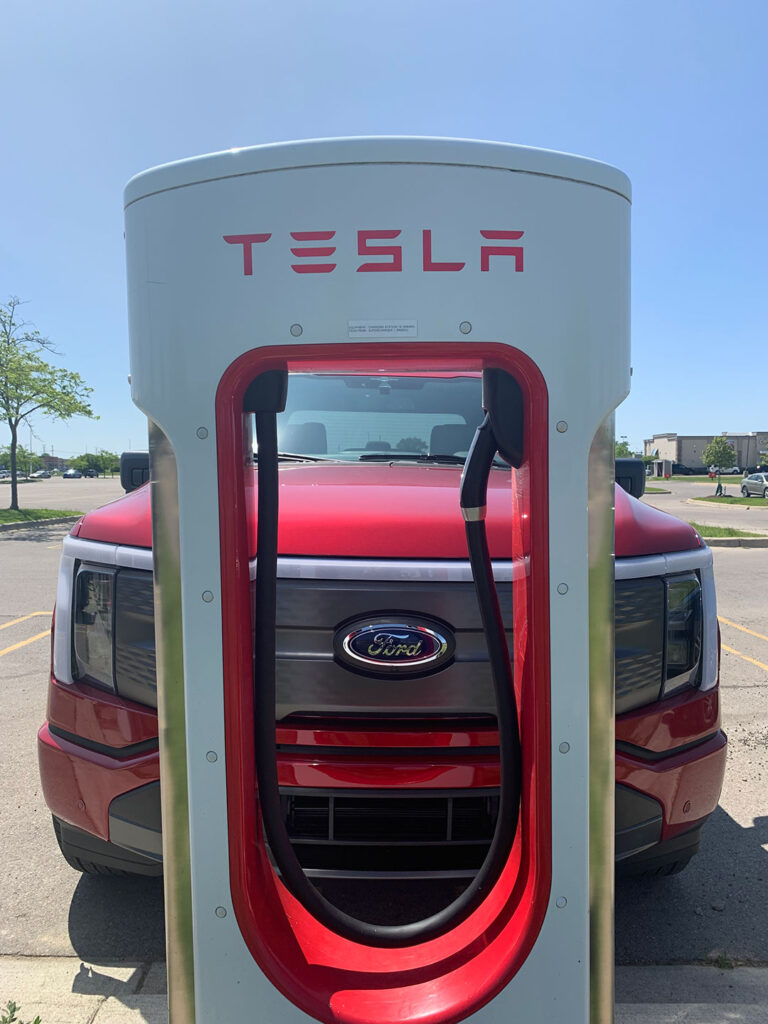
Additionally, some reprieve for EV owners will come this spring when Tesla permits Ford to use its Supercharger locations in North America. Part of this agreement includes Ford manufacturing EVs with Tesla’s port design to harmonize charging standards on the continent.
Stay tuned for constant Tesla updates. Follow us on:
Google News | Flipboard | X (Twitter) | WhatsApp Channel | RSS (Feedly).
Related
- Tesla (TSLA) Q3 2026 Earnings: 75% FSD attach rate, financial highlights, more

- Flight 15 catch, Starlink V3, SI ($1T revenue): Key takeaways from Elon Musk’s SpaceX (SPCX) Q3 2026 Earnings Call
- Elon Musk to give a share of SpaceX (SPCX) to every American child, President Trump praises the act, more
- Tesla keeps the new Roadster available to the Referral Award winners
- Tesla offers three Roadster variants: Performance, Thrust, and Rocket

- Tesla stuns the world with the flying Roadster stunts (videos), learn how it all works