

Tesla and Volvo are the only automakers worldwide who have set up their own crash safety testing facility. The Tesla Crash Lab is located at the company’s Fremont car factory in California.
The first video of the Tesla Crash Lab was shared by the automaker back in 2019. Tesla once again released a video of this safety testing facility yesterday.
In the last two years, Tesla has made significant advancements in how they are measuring results and performing new tests.
The last time Tesla shared its insights from the crash lab, the engineers mostly focused on safety algorithms based on Mathematical calculations and the dynamics of Physics.
Now, Tesla has huge amounts of data from a fleet of more than 1 million cars around the world. Tesla has now put this data to work while upgrading the safety systems in their cars. Tesla calls it “Data-Driven Safety”.
With big real-world data behind Tesla’s safety design, the crash tests designed and evaluated by traditional authorities like NHTSA and Euro NCAP now look dated.
This new development came just after Elon Musk replied to my co-author at CleanTechnia Zachary Shahan’s article titled “Tesla’s Safety Obsession”.
“Previously, the best way to design a safe car was for industry-standard crash testing. And those crash tests are like a few grains of sand, those grains of sand are meant to represent the beach. But in reality, the beach is infinitely complex, every crash is different,” said Dan who is a Tesla safety engineer.
“With emerging technologies, there are new opportunities, now we can look at the real world and design for that,” Dan was hinting at the constant data and video feed that Tesla gathers from its global fleet of more than a million vehicles.
Even if a Tesla car does not have the Full Self-Driving package, the basic Autopilot’s safety features play a vital role in the safety of the occupants as well as pedestrians and the surrounding vehicles.
Therefore, passing the traditional tests with 5-star ratings is a piece of cake for Tesla cars. Just like the Model Y passed the NHTSA safety test with flying colors earlier this year.
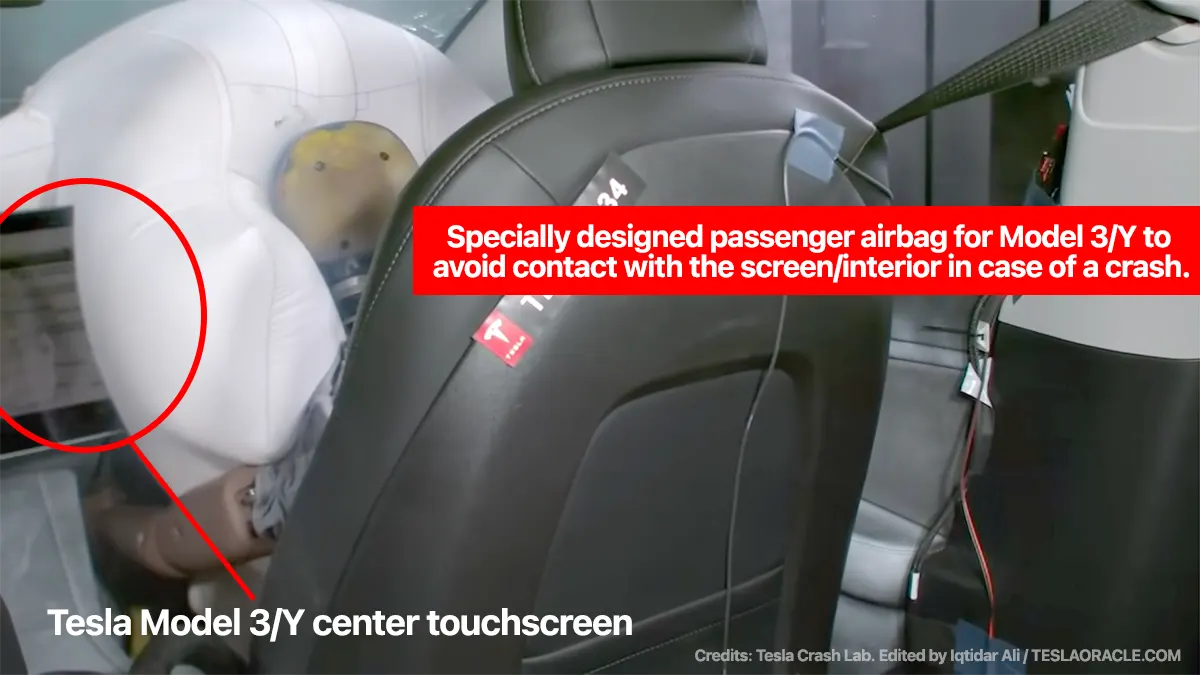
With the technology in Tesla vehicles, the automaker is able to determine when the airbags deploy in a crash, precisely to the millisecond. All other connected sensors also provide information about driving habits and driver behavior (now called the Safety Score).
This data also helps Tesla engineers fine-tune the safety systems closer to real-world scenarios. For example, industry-standard testing is focused on side impacts directly on the door, while Tesla found out with the help of data that this isn’t the case. Most of the time doors are not directly hit in a real-world accident.
Hitting a Tesla Model Y with a Pickup Truck
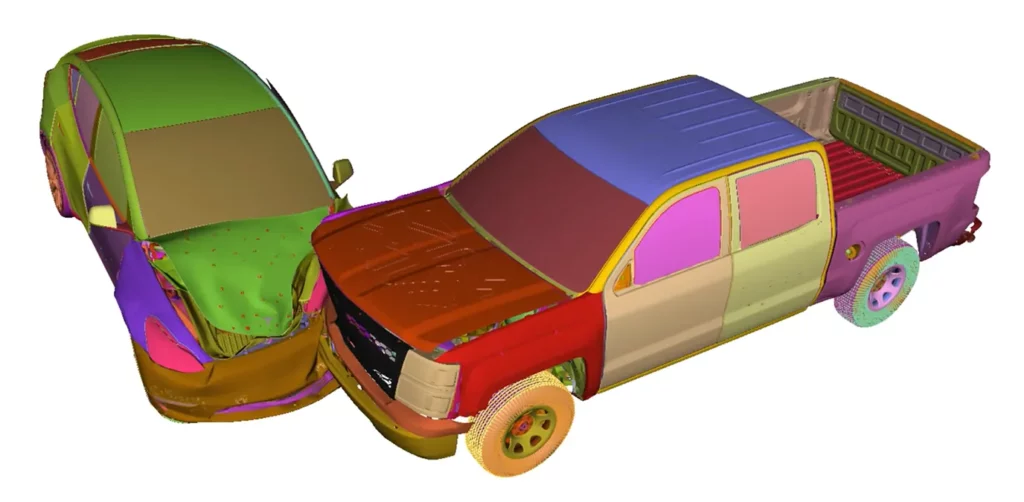
After running hundreds of simulations, Tesla tested a Model Y hit by a pickup truck from the side in the Crash Lab.
“This new algorithm takes into account the current sensor-set interpreted in a new way so that we can identify this particular type of crash and provide optimum restraint for that situation,” a Tesla safety engineer explained the test in this video.
Tesla used 17 high-speed cameras to record this crash test at a speed of 1,000 frames per second (fps). The data collected with these advanced cameras play a vital role in analyzing a big crash test like this, a Tesla engineer further explained.
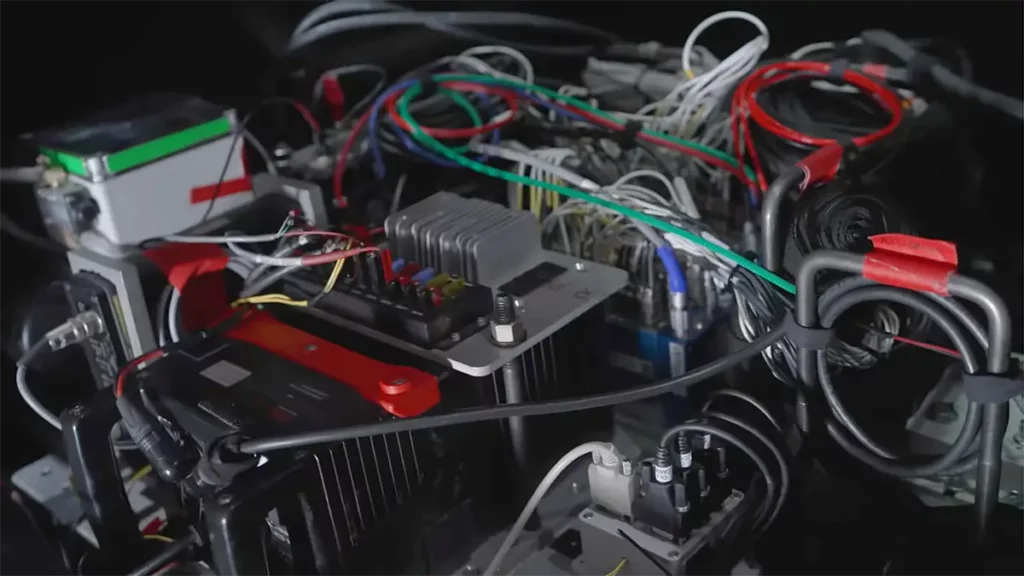
The instrumentation cluster (shown above) can determine the type and magnitude of impact within 10 milliseconds of the car being hit. The system then will trigger the airbags and the restraint system to respond in the best possible manner.
Tesla safety engineers got the data they wanted from this successful test. Everything happened exactly as they expected.
The data collected from the Tesla Crash Lab is used for data analytics, crash simulations, and further tests. This data is then infused into the free over-the-air software updates that make the entire global fleet of vehicles safer with each new version of the vehicle software.
And most interestingly, Tesla owners never have to pay a dime as their cars get safer and safer with time.
Stay tuned for constant Tesla updates. Follow us on:
Google News | Flipboard | X (Twitter) | WhatsApp Channel | RSS (Feedly).


.)