

Last week, Tesla (TSLA) started testing the steering-less Cybercab robotaxi in Austin, Texas. Interestingly, these are engineering test vehicles, as the head of Tesla AI, Ashok Elluswamy, confirmed on X.
The company’s CEO, Elon Musk, said that in addition to the absence of a steering wheel, Cybercabs don’t have any pedals either. Tesla Cybercab is designed for full autonomy, so there is no place for steering wheels or acceleration/brake pedals in these self-driving vehicles.
As we reported back in March, Tesla sent several engineering test units to various locations in the US. The automaker has finally revealed that it’s testing steering-less Cybercabs on the public roads of Austin, TX.
This public testing also suggests that the Cybercabs currently being produced at Giga Texas are engineering test units. The current production vehicles are not intended for sale. They are used for testing and as display cars across the US.
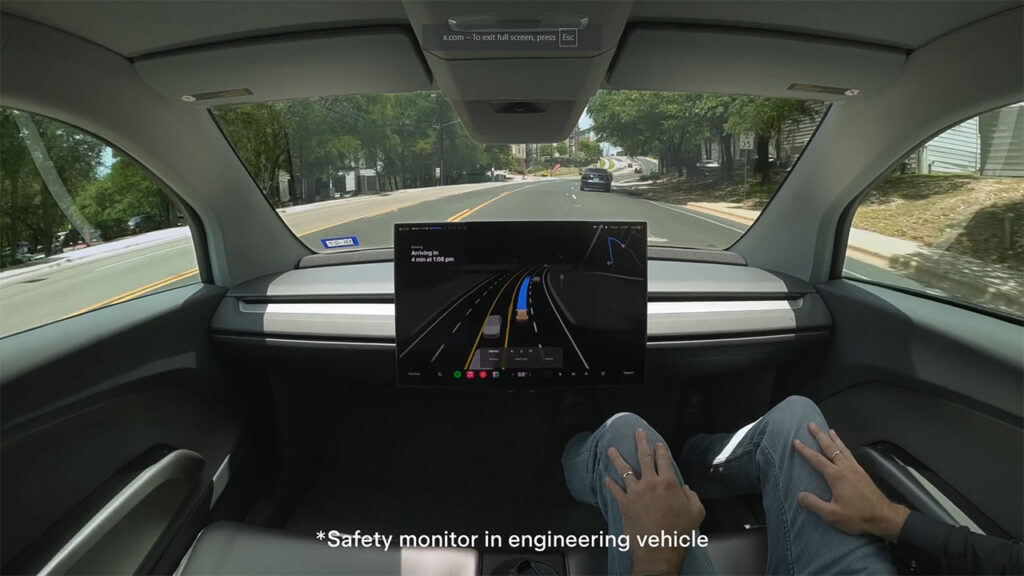
Cybercab Engineering Tests
Tesla performs extensive and long-term engineering analysis and testing on each of its prototype vehicles. Cybercab is, to date, the most ambitious autonomous project of the company. Therefore, it requires immense testing and real-world testing data before it gets into the hands of the customers.
Tesla is currently operating its Robotaxi Service using Model Y Juniper electric SUVs in multiple US cities (Austin, Dallas, Houston, SF Bay Area, and Miami). However, the Model Y robotaxis have a steering wheel and pedals physically present in the vehicles.
Cybercab, on the other hand, carries less and less of the legacy from the previous generation of cars. Tesla needs a ton of real-world testing data to launch these cars for use by its customers with maximum safety.
Tesla CEO Elon Musk announced earlier this year that the automaker aims to launch these smaller 2-seat Cybercabs before 2027 and under a price tag of $30K.
However, influencers like MKBHD don’t believe that Elon Musk and his company will be able to achieve such an ambitious target before 2027.
Tesla Robotaxi Model Ys and Cybercabs run a more advanced version of Full Self-Driving (FSD) AI Vision software compared to the publicly available FSD v14.
Tesla Cybercab is an entirely new and different vehicle compared to the existing vehicle lineup. Its dimensions are much smaller, even compared to the Model 3 EV. So, Tesla engineers need to revalidate FSD on a new vehicle.
The previous data of billions of miles helps a lot, but it needs to be recalibrated to the Cybercab’s specific shape and dimensions.
As Tesla aims to start selling the steering-less two-seat Cybercabs by the end of this year, the engineering tests should last a few more months if all goes as planned.
Stay tuned for constant Tesla updates. Follow us on:
Google News | Flipboard | X (Twitter) | WhatsApp Channel | RSS (Feedly).
Related Tesla Robotaxi News
- Tesla to hold the Cybercab Austin, Texas launch event on September 3

- Tesla Cybercabs spotted AI-learning multi-lane stop signs at Giga Texas (FSD v15) ahead of Austin launch
- Tesla (TSLA) obtains approval for Robotaxi Service in Nevada (including Las Vegas)

- Here’s how to win a chance to attend the Cybercab launch event, Tesla holds the date announcement

- Tesla (TSLA) gears up for Cybercab robotaxi launch, leases an 80 wireless charger location in Austin, Texas
- Tesla launches Robotaxi Service in two more Florida cities


 has started testing its Cybercab robotaxi vehicle on the public roads of Austin, Texas (get the details and video).)