

After staying in the open ocean for more than one month, Flight 13 Starship 40 spacecraft has finally begun its journey back home to Starbase, Texas, United States.
It took huge efforts by SpaceX engineers, technicians, and maritime experts, along with large recovery vessels, to rescue Starship 40 from the Indian Ocean.
On July 24, SpaceX (NASDAQ: SPCX) conducted the Starship Flight 13 launch-and-landing test (IFT-13). This was a successful test overall.
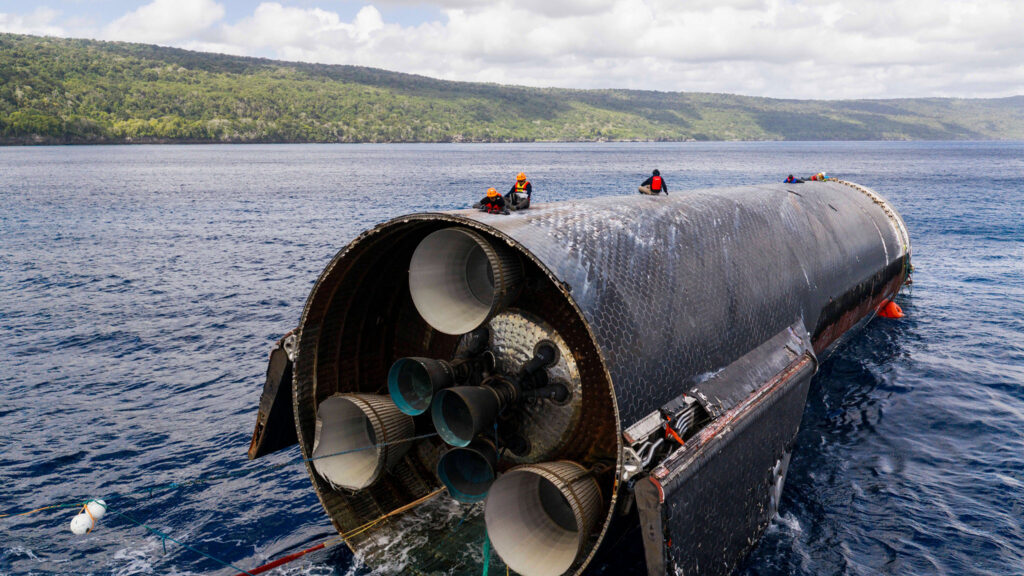
The most interesting part of this flight was Ship 40’s soft splashdown landing and floating on the sea surface. Since then, it was floating on the sea. At one point, Elon Musk said the recovery didn’t look good for Ship 40.
However, after continuous efforts, SpaceX has successfully loaded Starship onto a semi-submersible ship to return it to Starbase.
SpaceX officially announced the successful rescue of Starship 40 on 27th August, but the company reported it a bit late (by about two days).
SpaceX also shared stunning pictures of its loading onto the vessel and released the following statement:
Starship has now been loaded onto a semi-submersible ship to begin the several month journey back to Starbase. Congratulations to the entire SpaceX Recovery team for battling through challenging conditions to give our engineers access to a wealth of data to continue rapidly developing Starship
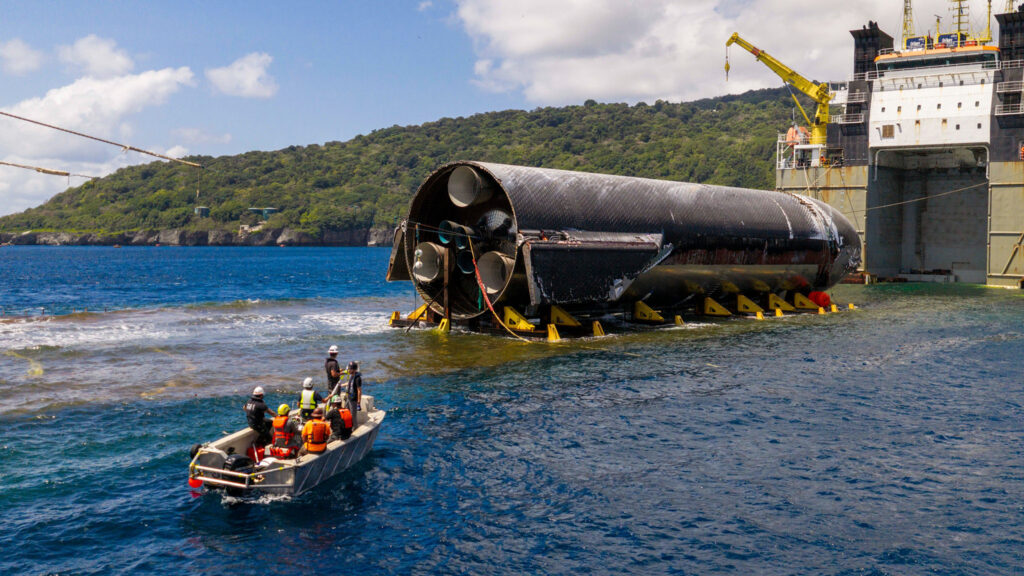
A semi-submersible vessel is designed to transport other ships and large objects in the sea. To lift large oil rigs, ships, and, in this case, a 52-meter-long Starship, these vessels purposefully drown their deck to lift the heavy object from the surface of the sea.
The vessel carrying Starship back to Starbase, Texas, is named Forte. With the help of two other vessels and heavy machinery, Starship was guided onto the Forte’s deck.
According to SpaceX, it will take several months for Starship 40 to reach the shores of the United States. It will be interesting to see it as part of a historical collection at the Rocket Garden in Starbase, Texas.
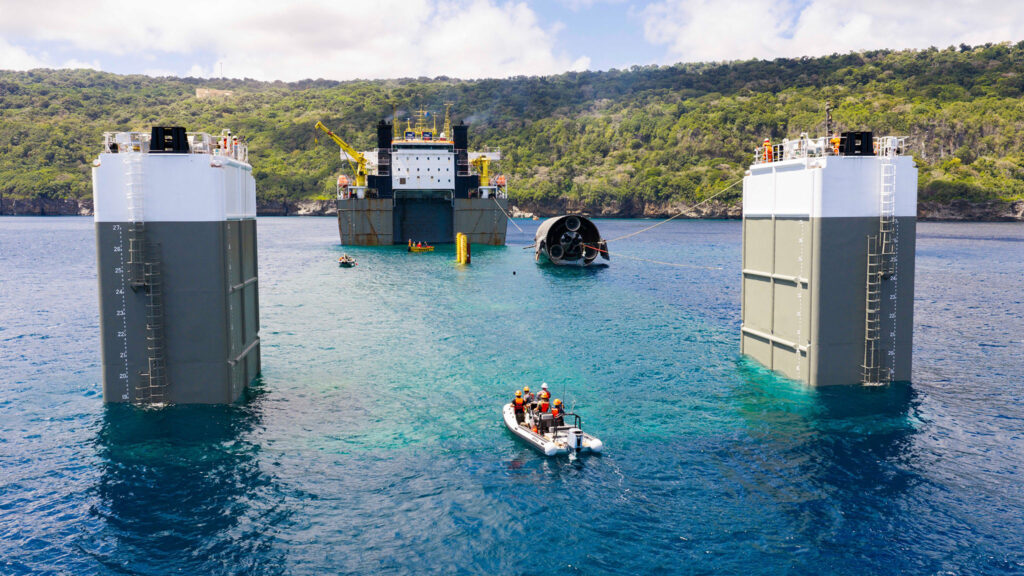
Ship 40 Recovery Footage — Christmas Island – Project Fallen Star 2 pic.twitter.com/bJ1EsJBSlm
— IGW (@interstellargw) August 30, 2026
Starship 40 Observation Data
Elon Musk’s SpaceX teams didn’t wait for the Starship to arrive back home. Engineers and technicians reached Starship 40 in the Indian Ocean, where it was floating.
In the past few weeks, SpaceX staff have analyzed Ship 40 and gathered as much data as possible. They took thousands of pictures and made videos of critical areas of the spacecraft for analysis.
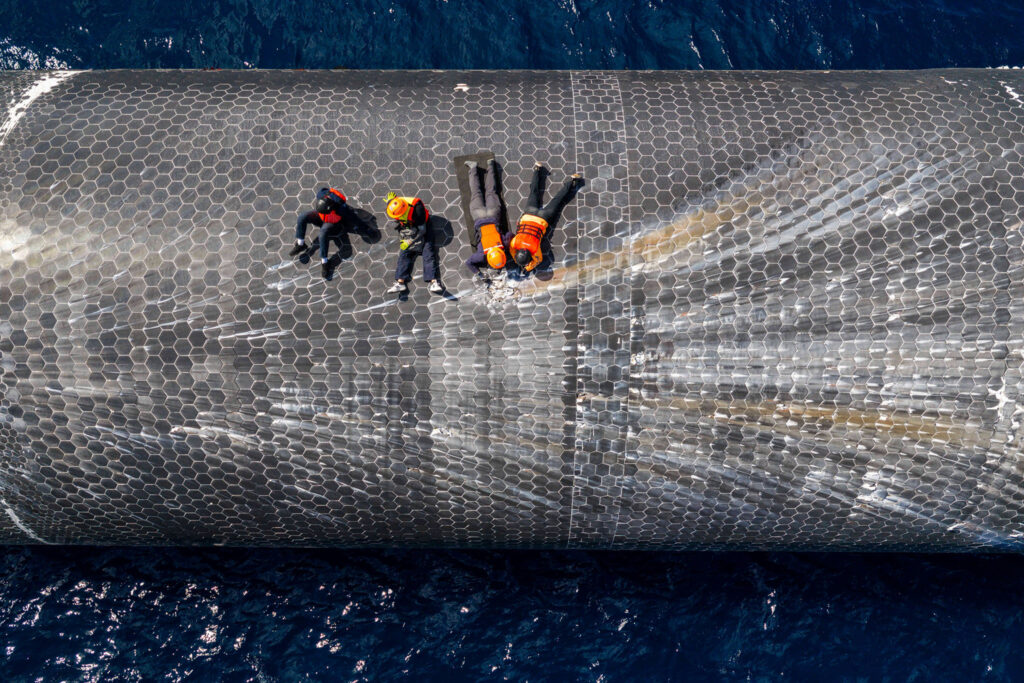
In the following official photo shared by SpaceX, the company’s engineers are seen lying on the floating Starship, closely monitoring the damaged heat shield tiles.
The thermal protection system (TPS) is critical for atmospheric reentry. To enhance Starship’s endurance to extreme temperatures and friction at reentry, SpaceX has installed thousands of hexagon-shaped heat shield tiles on the belly side of Starship.
These heat protection tiles are designed and manufactured in-house by SpaceX. By the time Starship returns to Starbase, SpaceX will have already analyzed a ton of data about Flight 13.
Stay tuned for constant Tesla updates. Follow us on:
Google News | Flipboard | X (Twitter) | WhatsApp Channel | RSS (Feedly).
Related Starship / SpaceX News
- Starship 40 joins three other ships inside SpaceX’s Megabay at Starbase, it’s time for some serious data collection

- Flight 13 Starship 40 returns home to Starbase, Texas, after months at sea

- SpaceX deployed 26 terabits per second of Starlink V3 bandwidth in a single Starship launch (Flight 14)

- Watch Flight 14 Starship launch live stream recordings and read the live updates archive

- SpaceX completes Starship Flight 14 launch rehearsal, gets final FAA approval for launch on Monday, more

- SpaceX (SPCX) President Gwynne Shotwell files to sell $52M worth of the company’s shares



.)